A Rare Ducal "Armada" Strongbox (Travelling Safe) wrought iron with original polychrome painted decoration, Nuremberg, late Renaissance, late 16th / early 17th century
11936
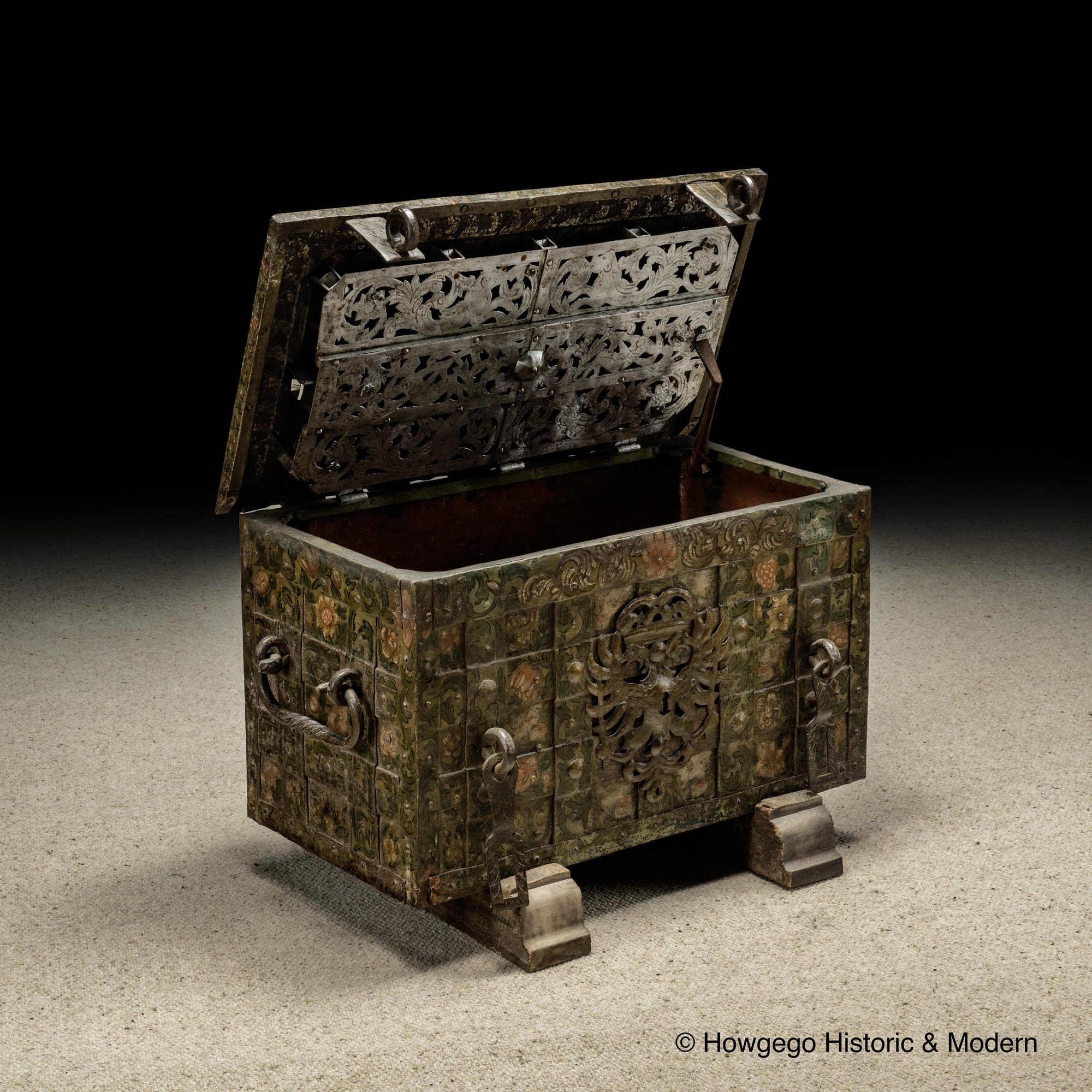
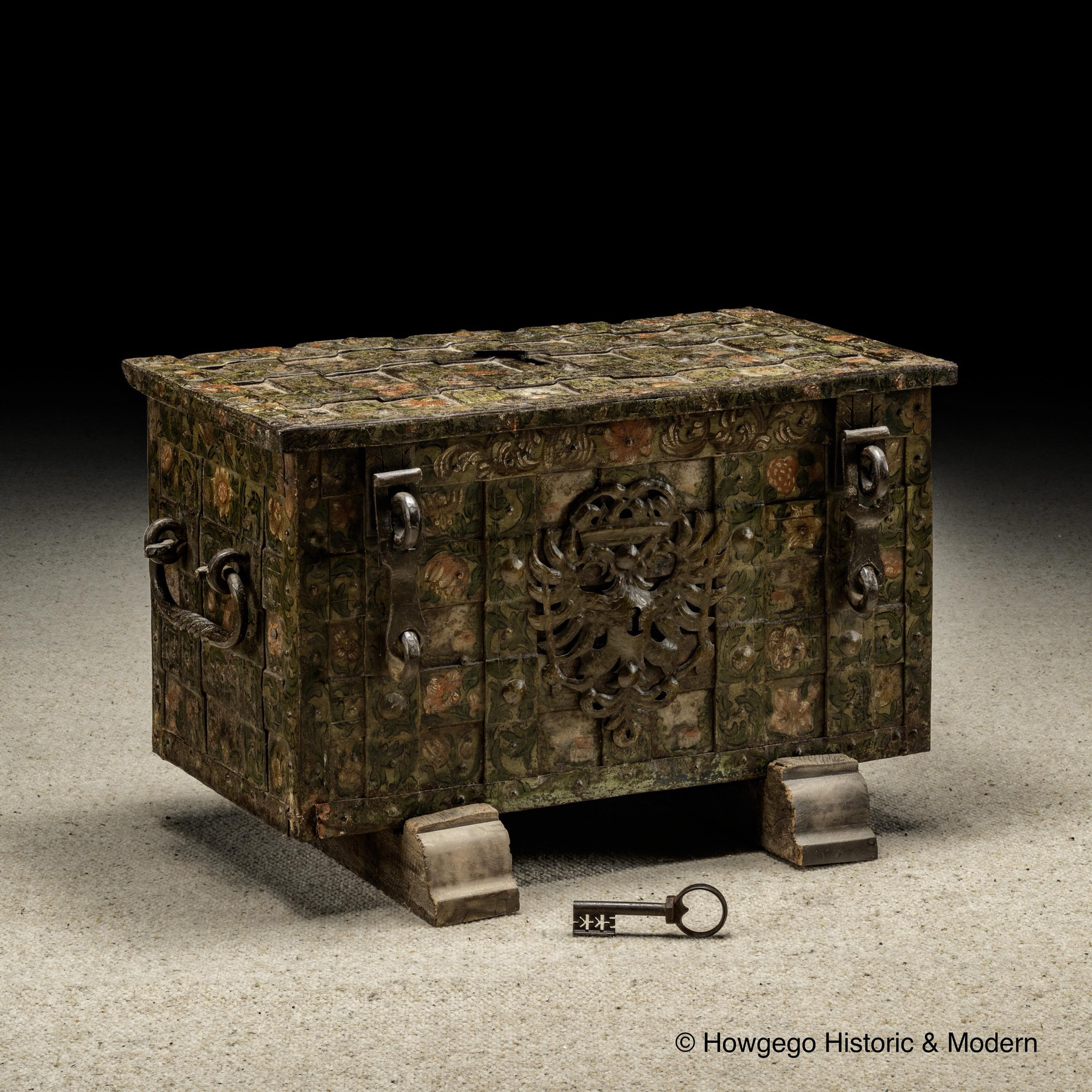
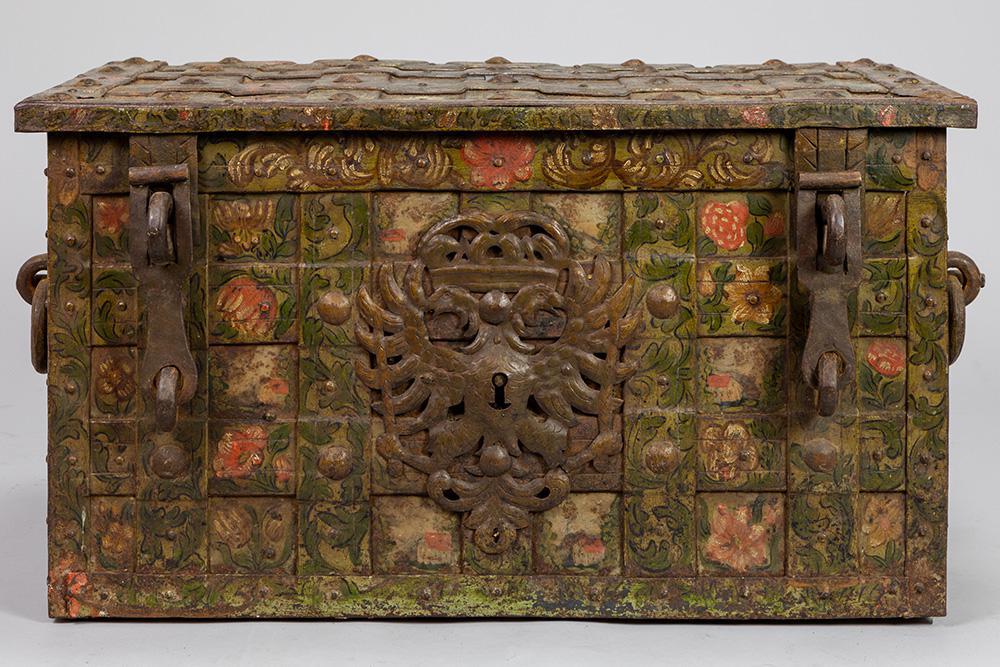
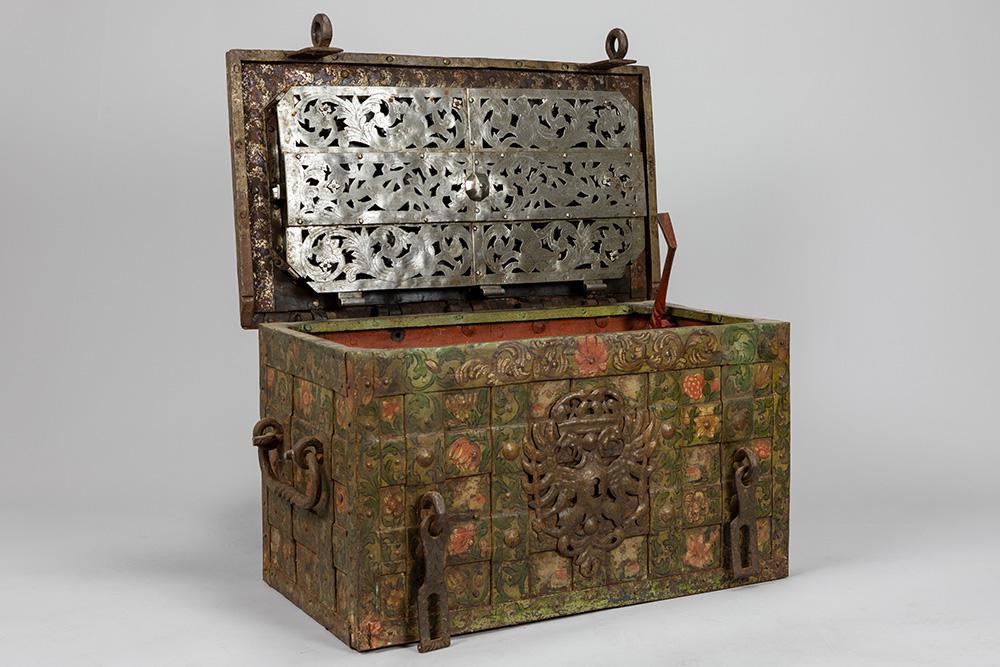
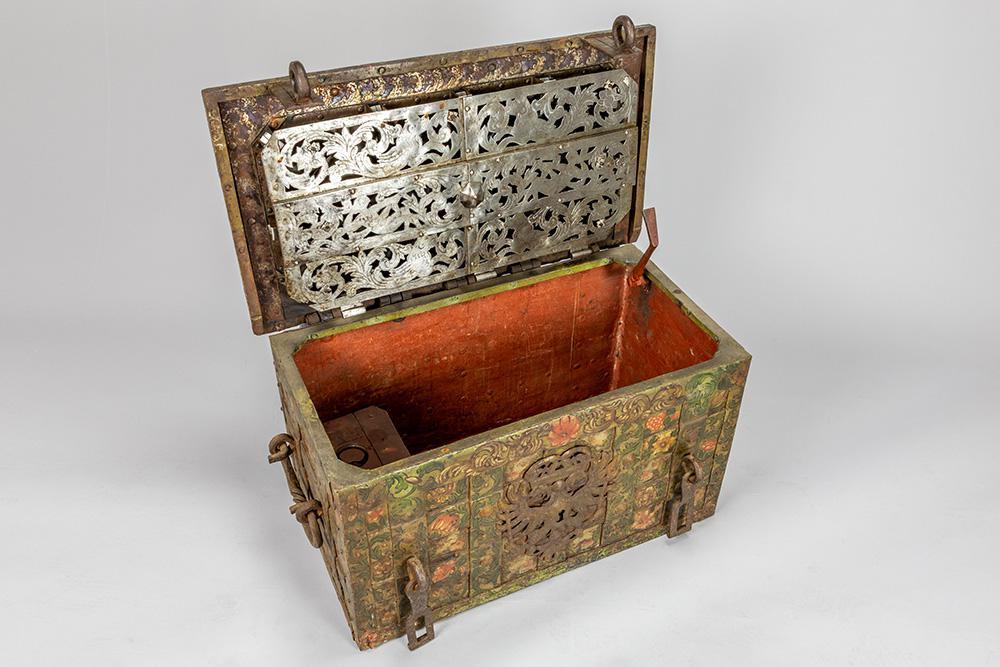
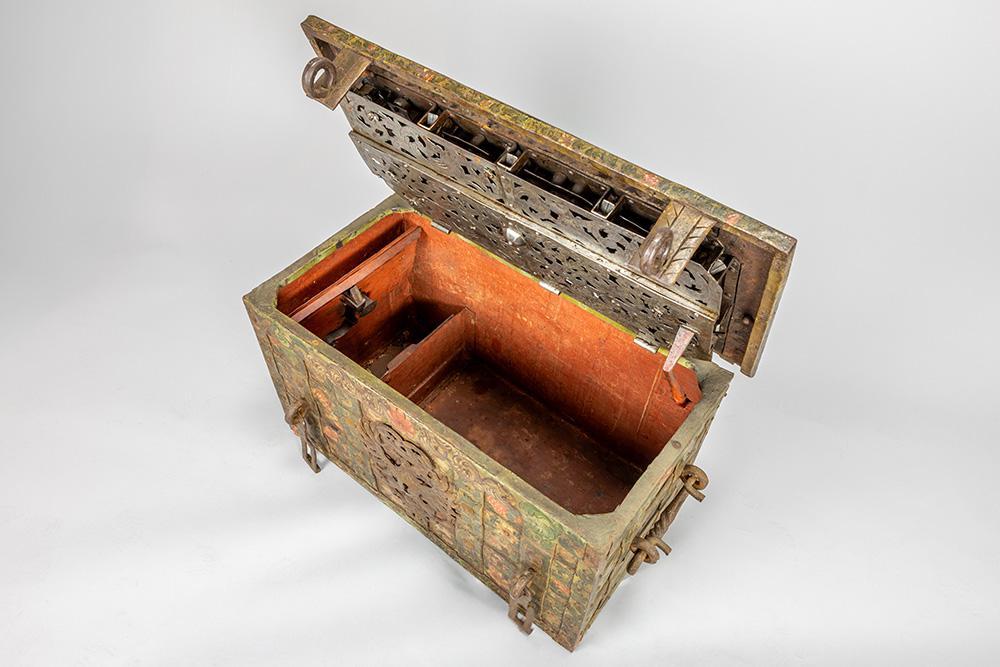
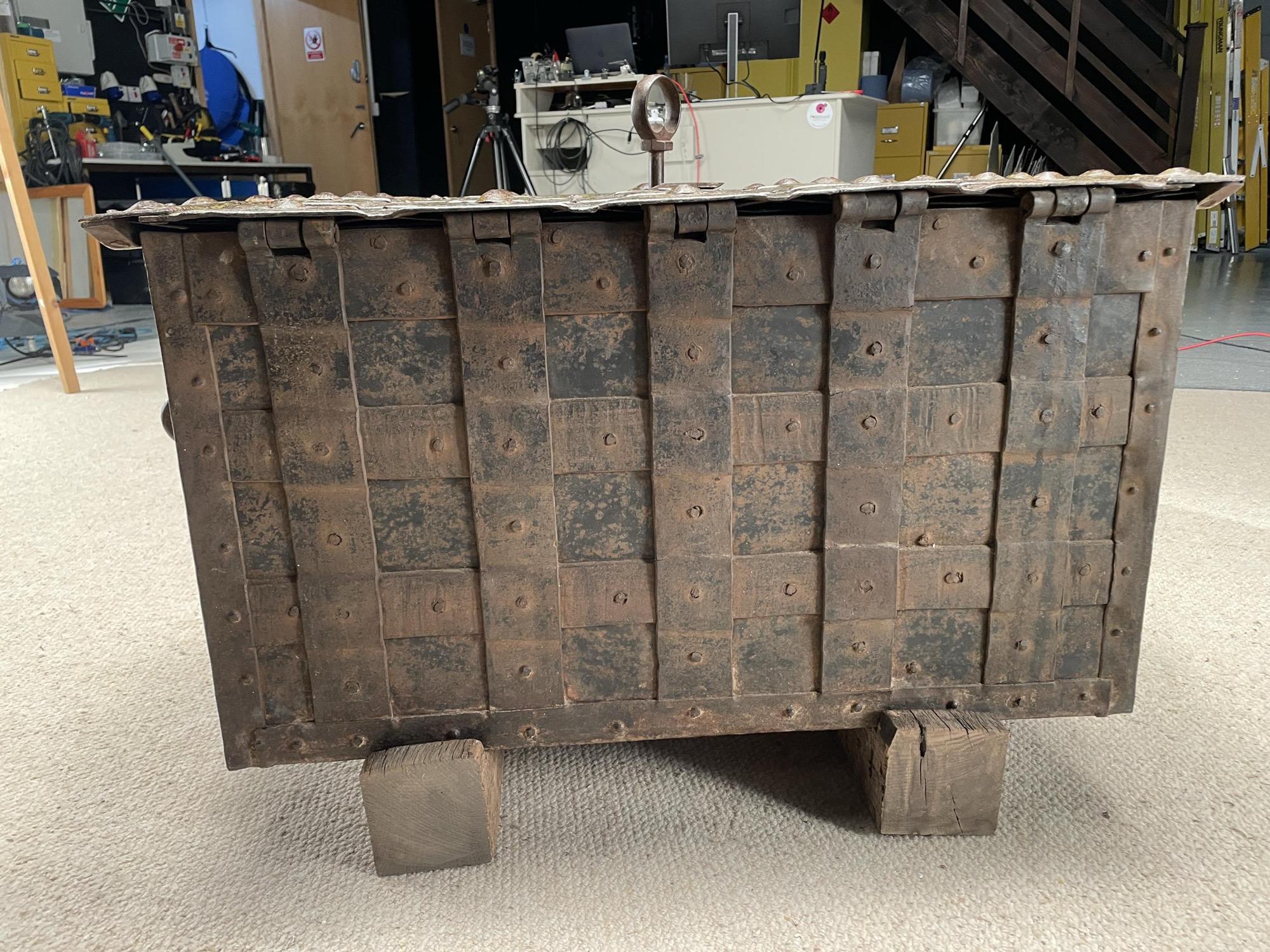
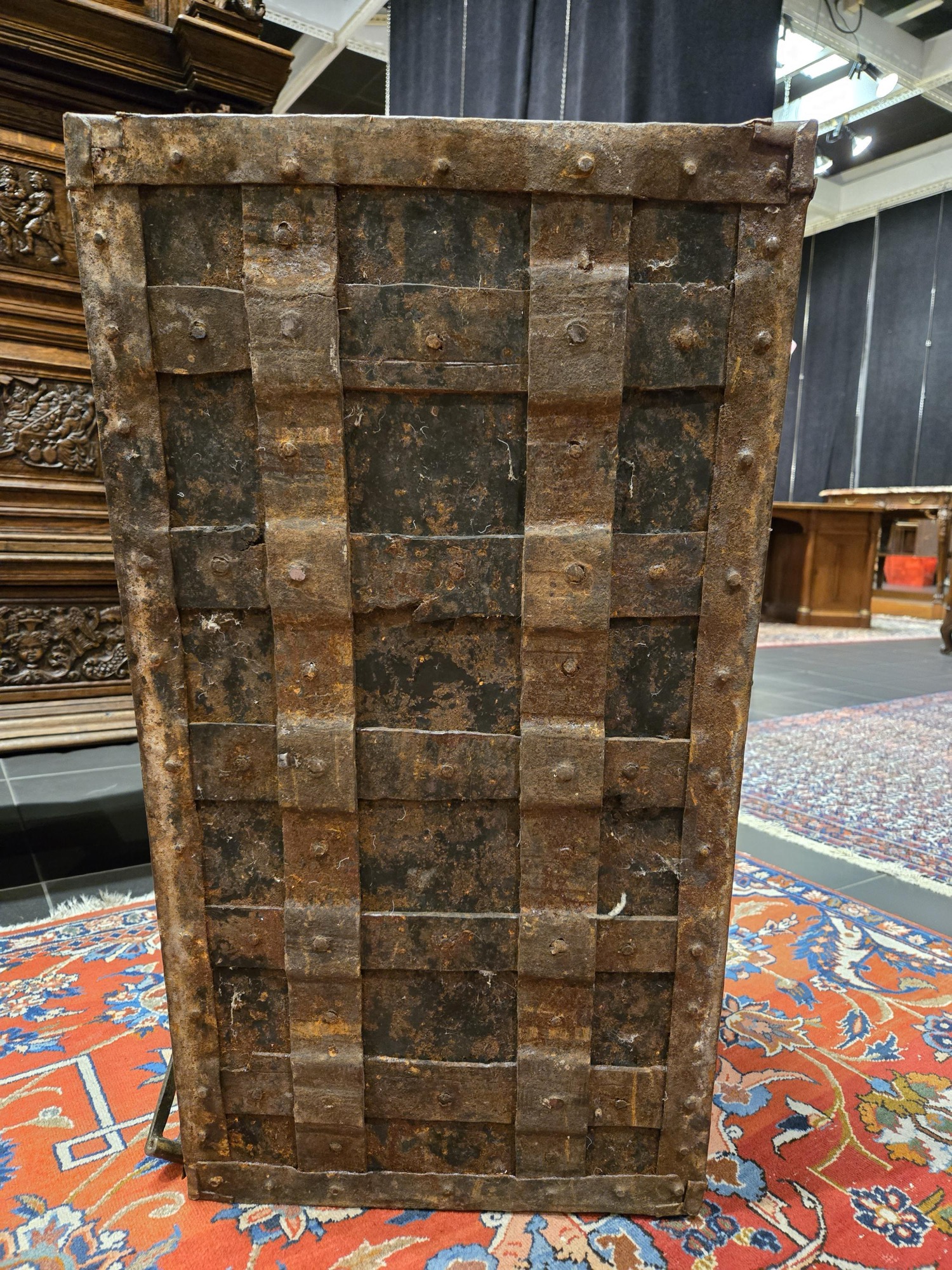
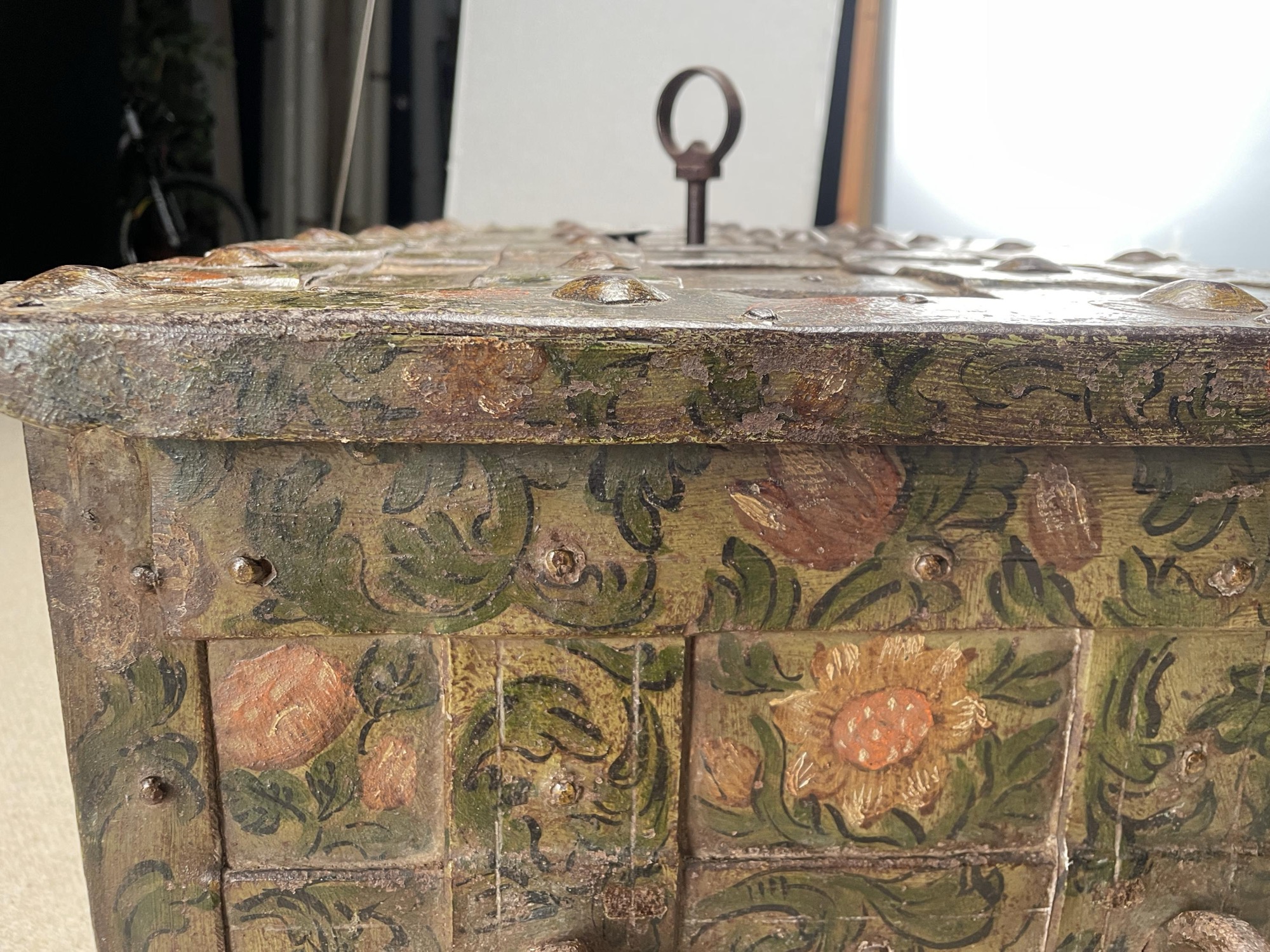
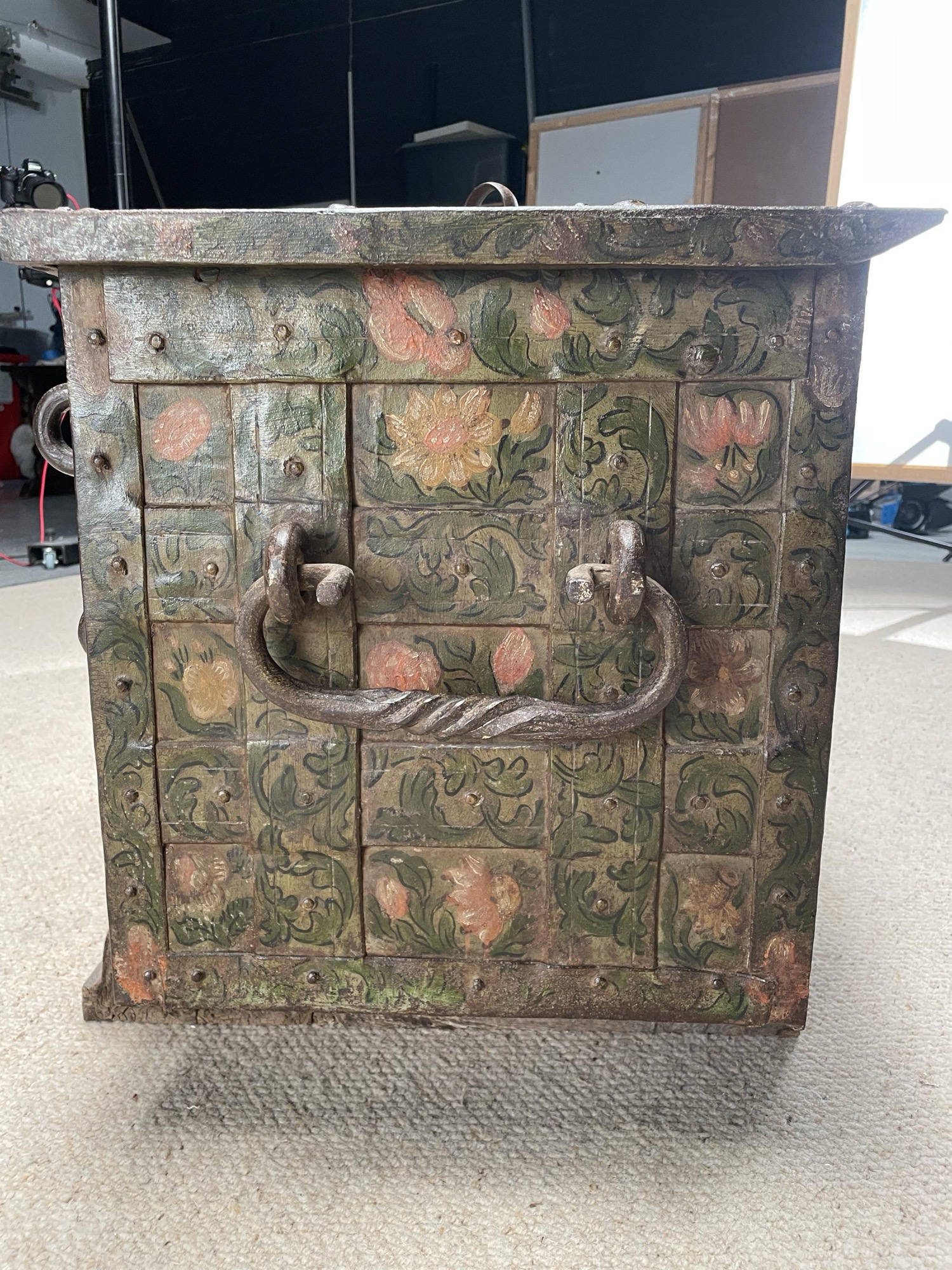
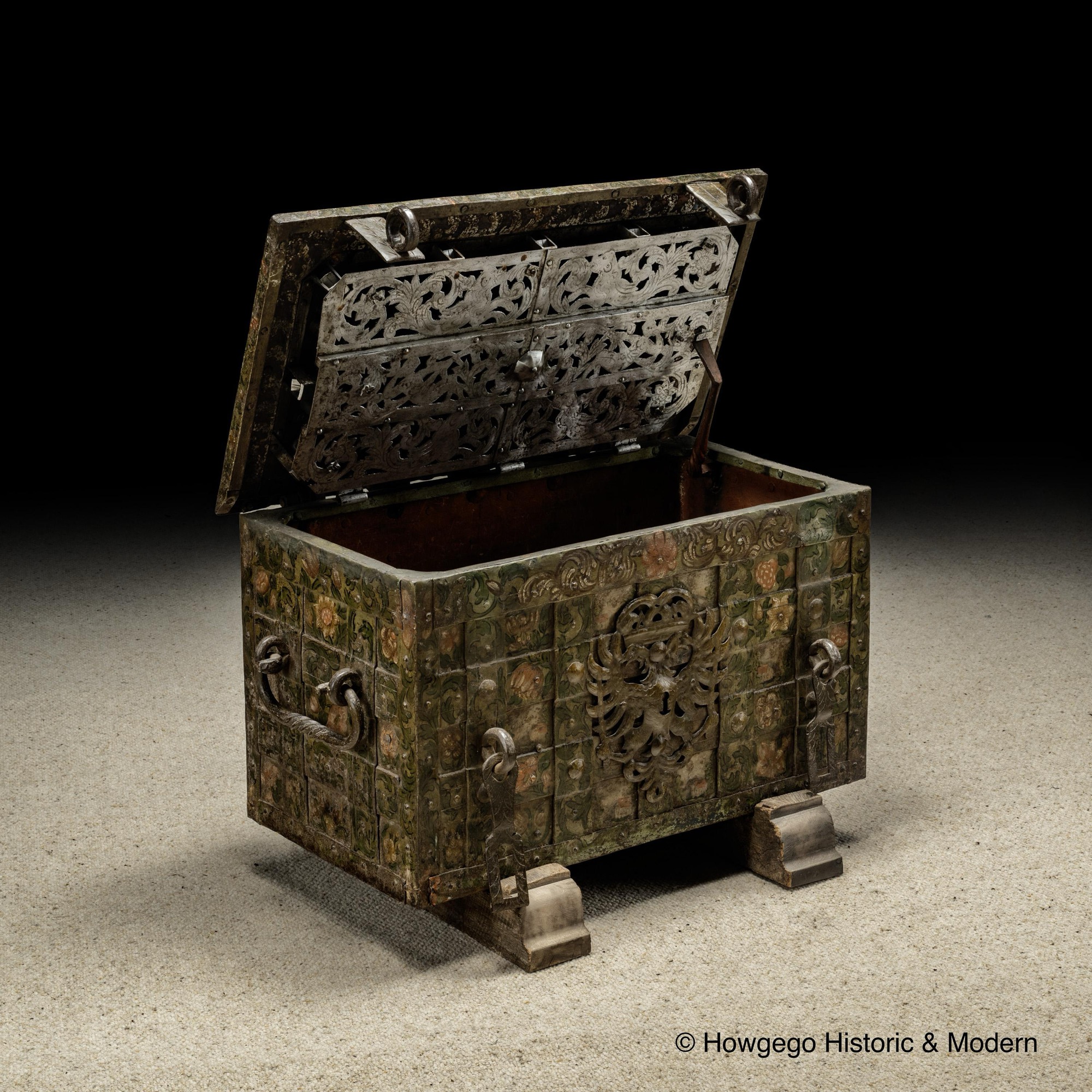
An exceptionally rare and highly original late-Renaissance Nuremberg iron strongbox, or travelling safe, of the so-called "Armada box" type, distinguished by its noble provenance, unusually rich iconography, and the outstanding survival of its original painted decoration. The strongbox stands on later sledge feet.
Description and Decoration
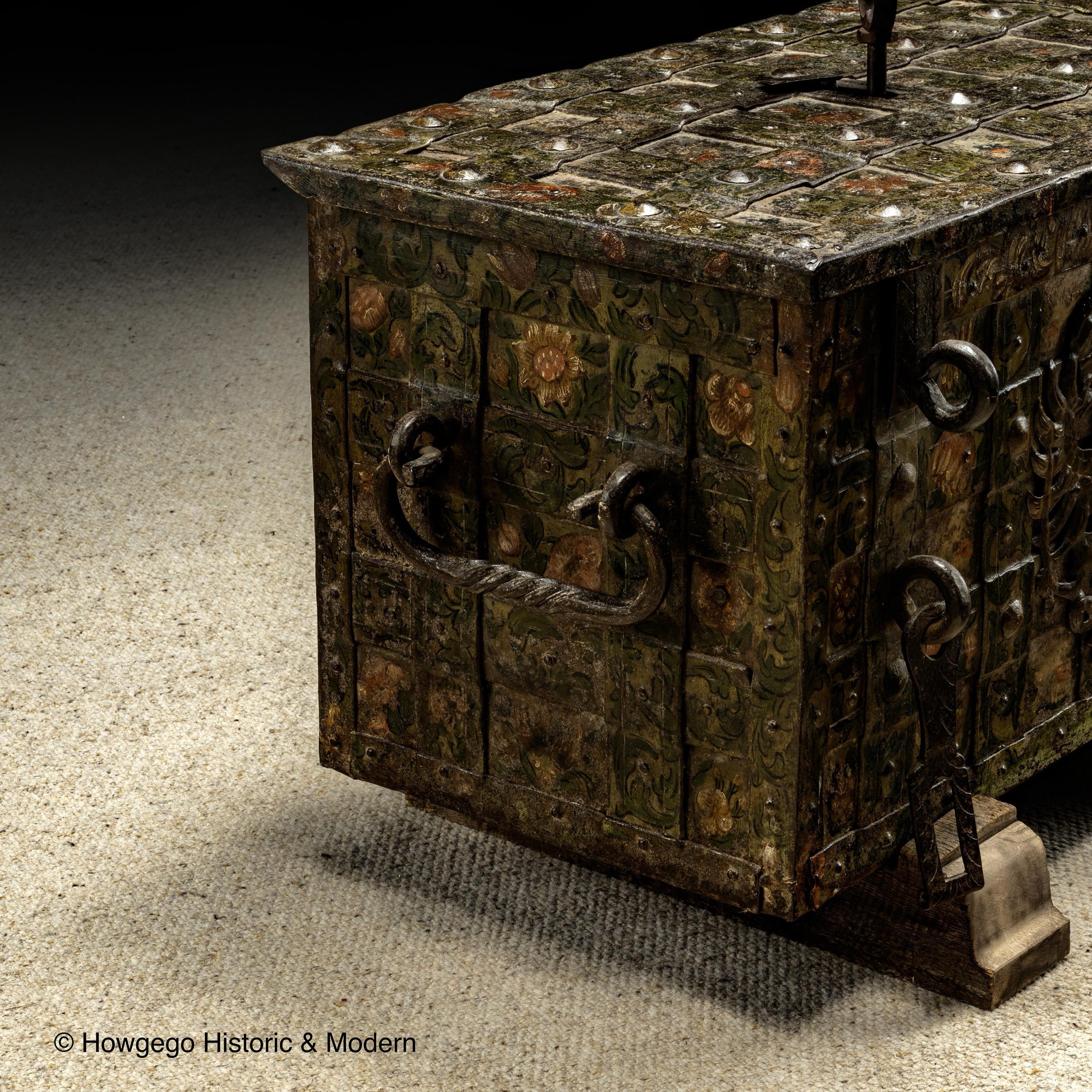
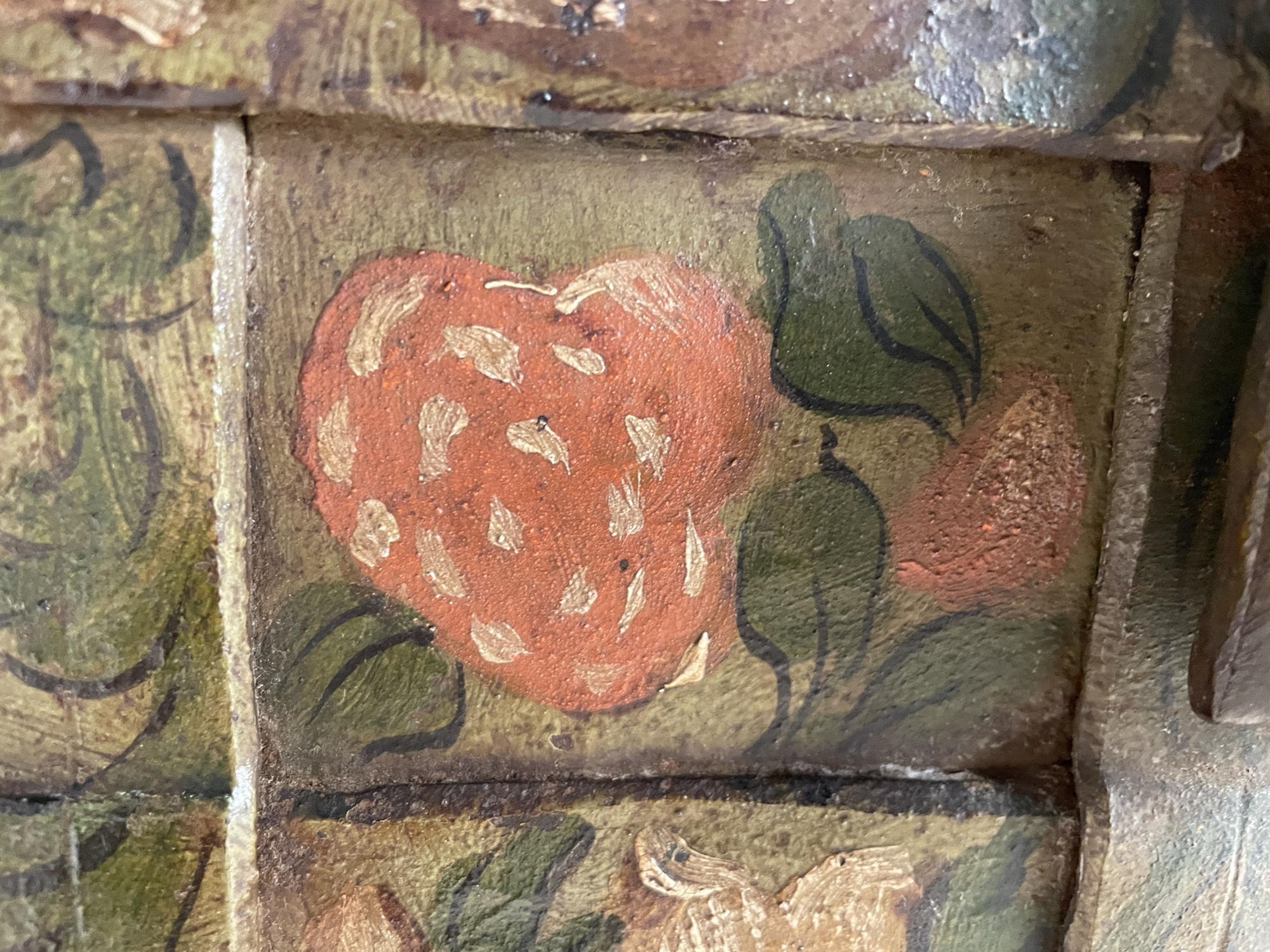
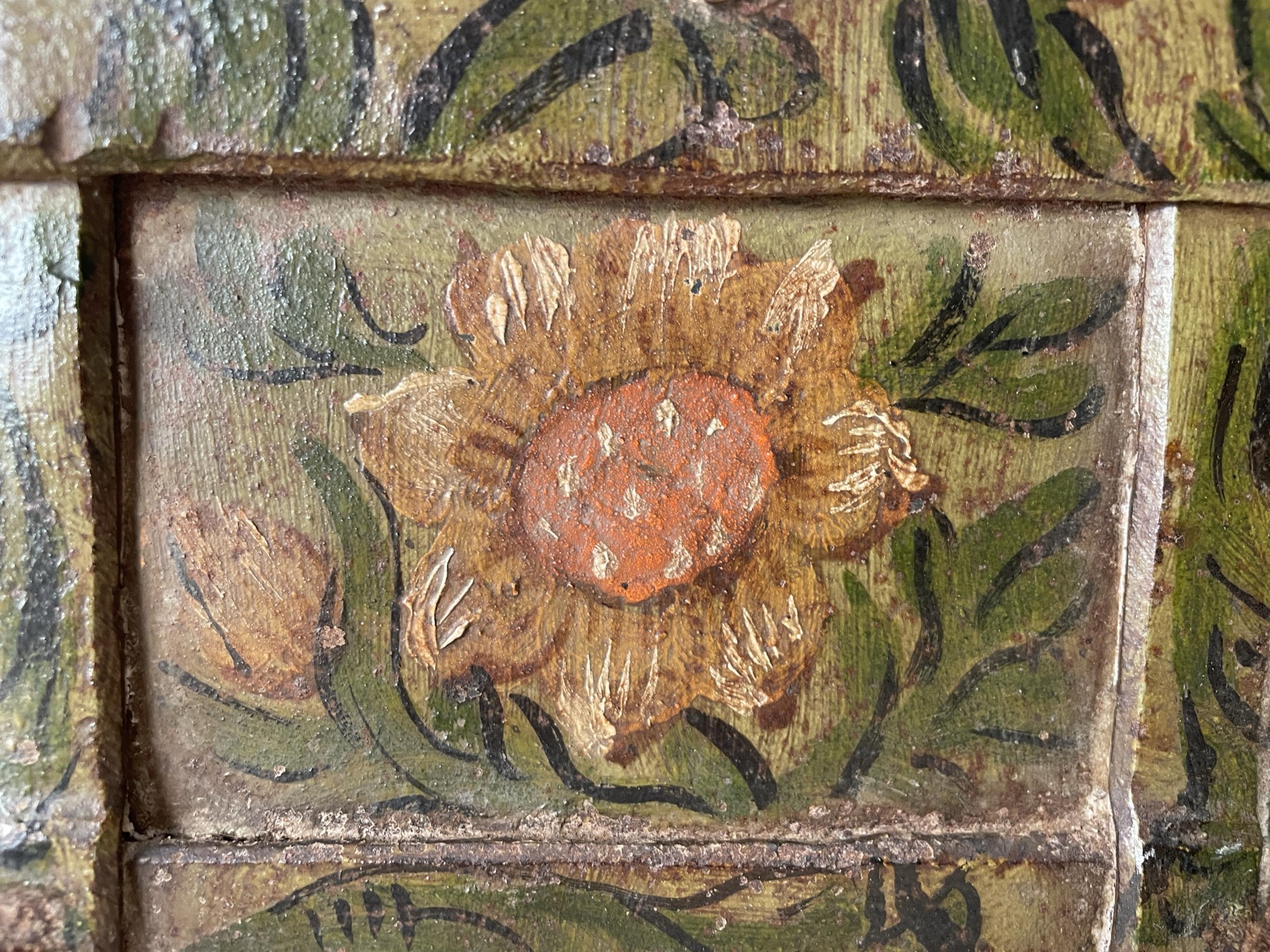
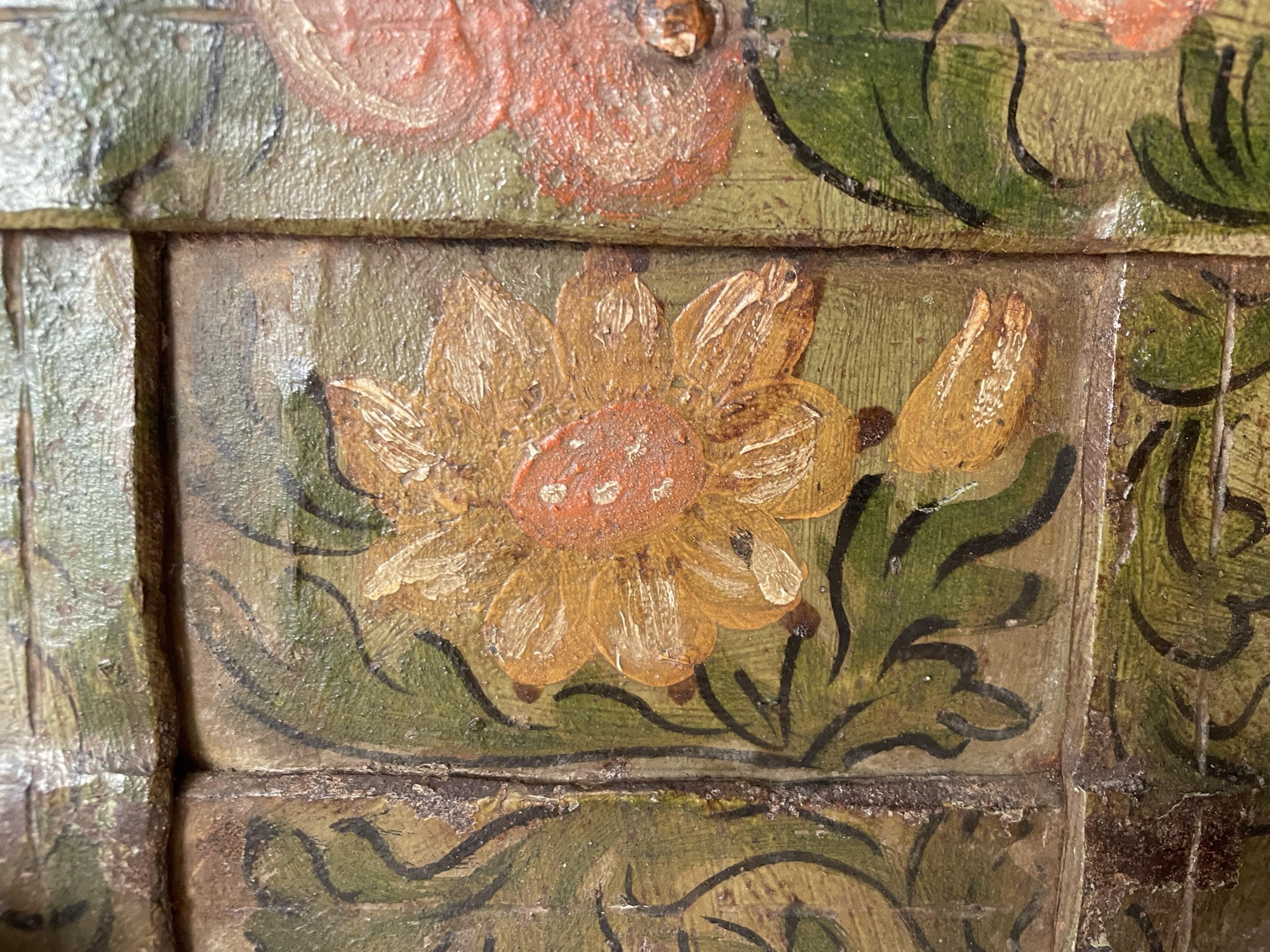
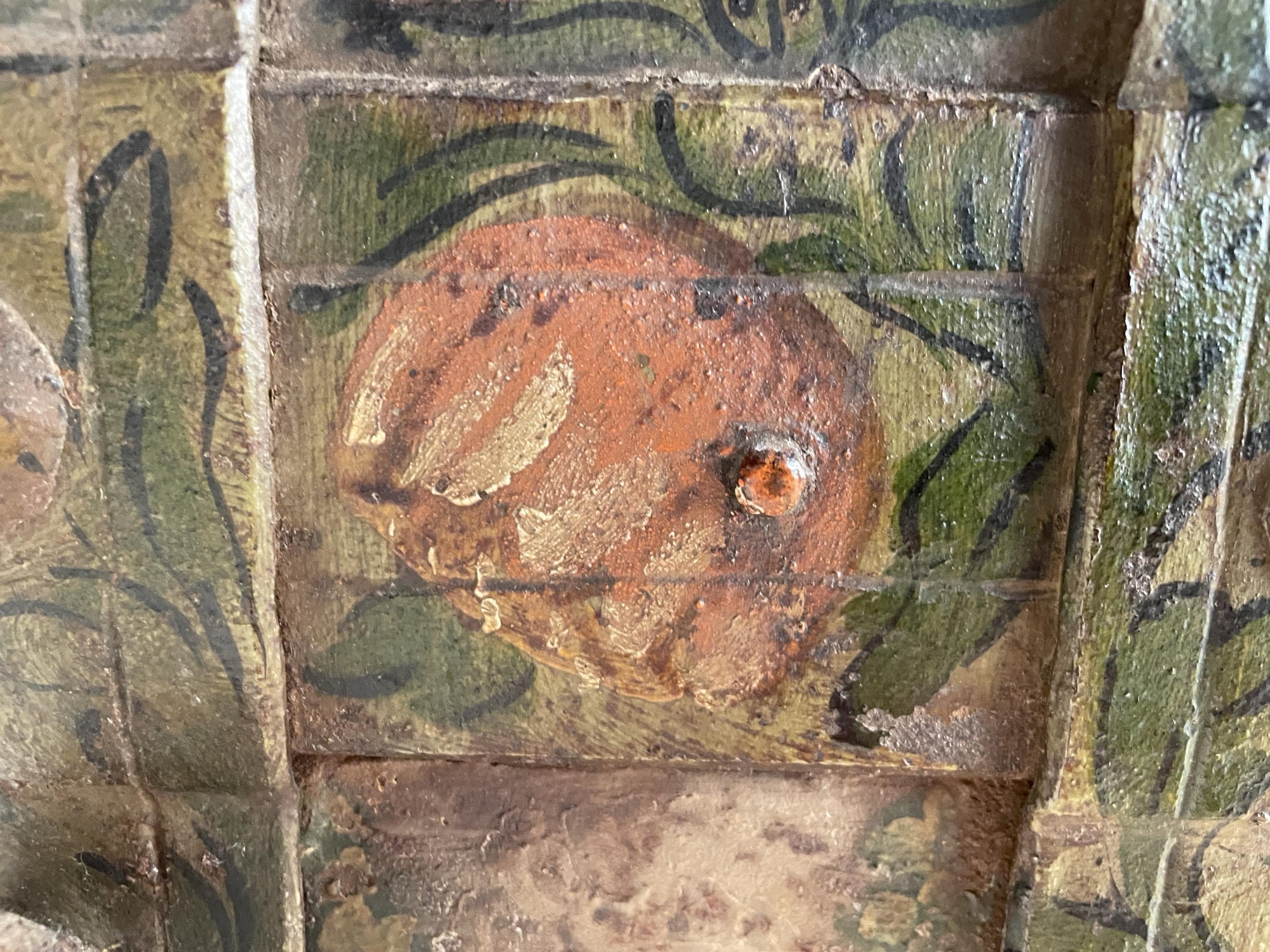
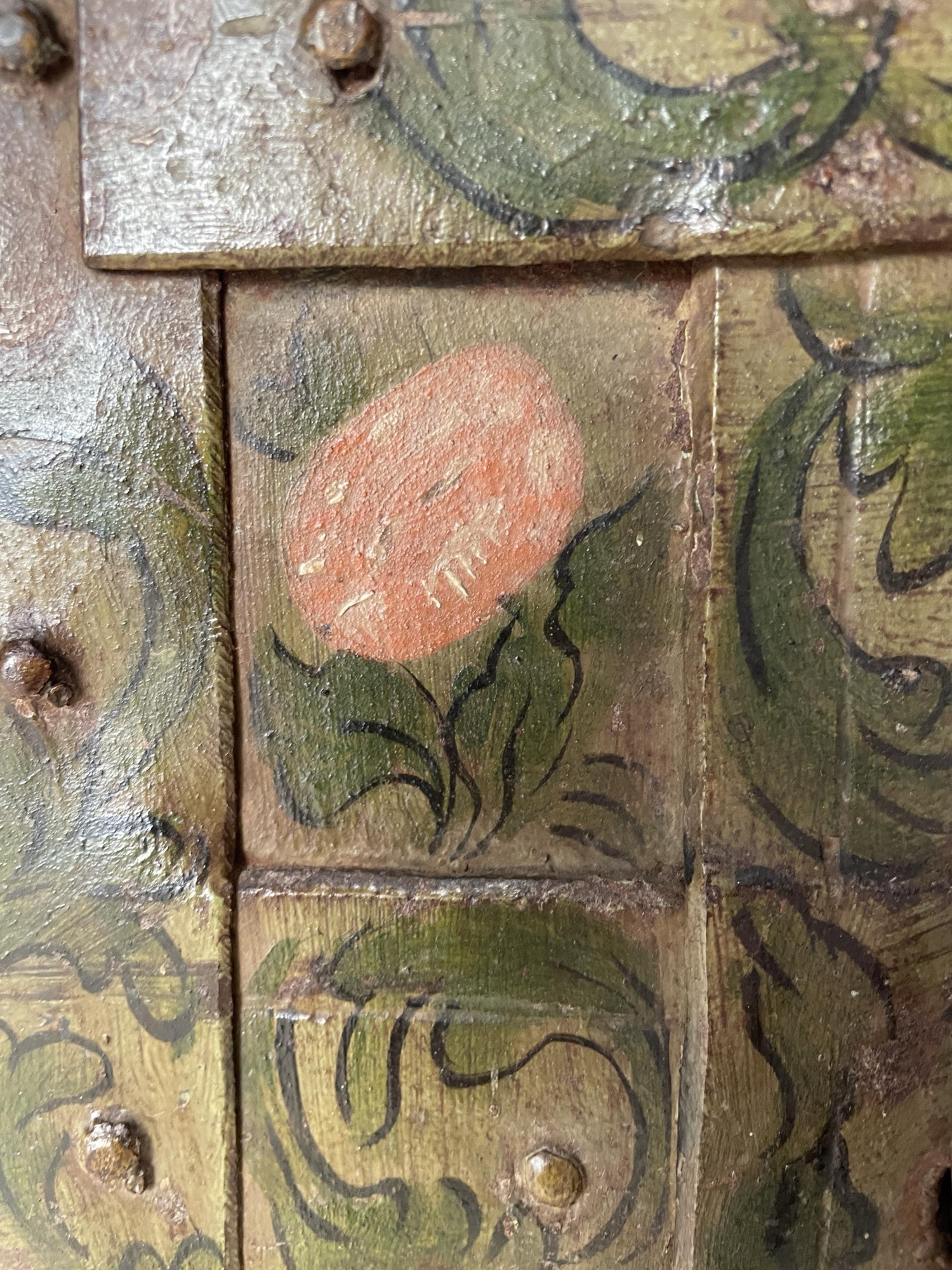
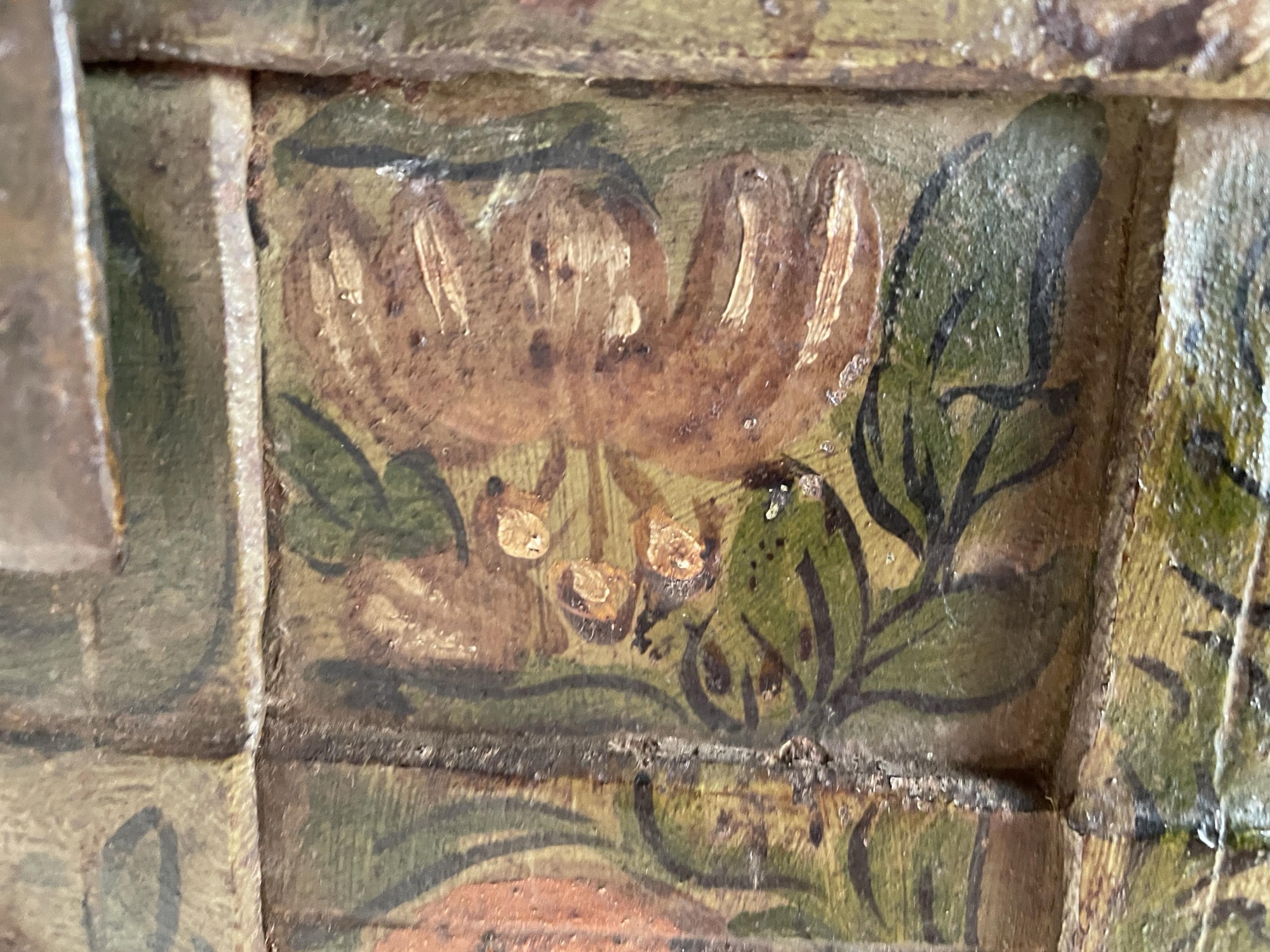
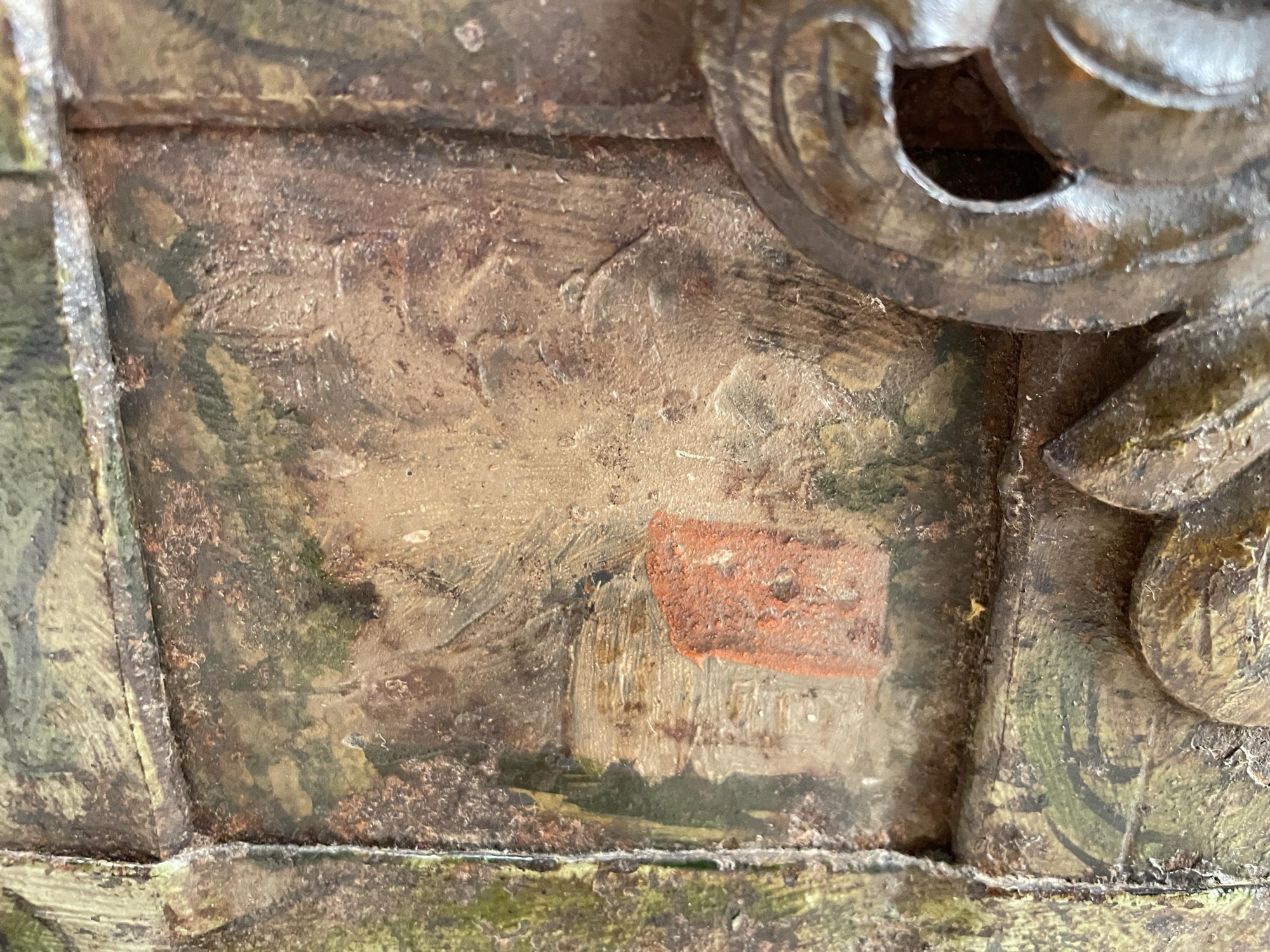
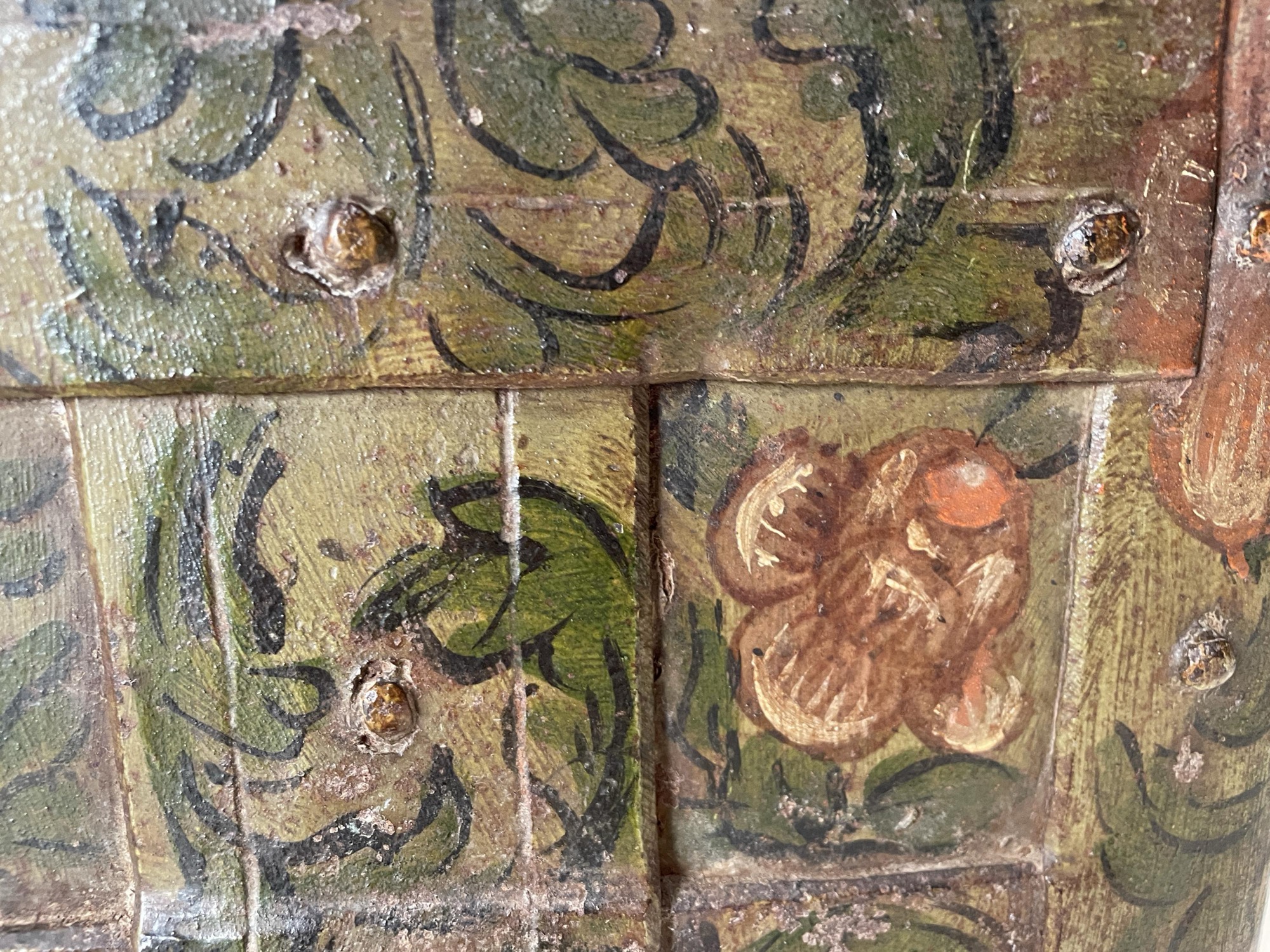
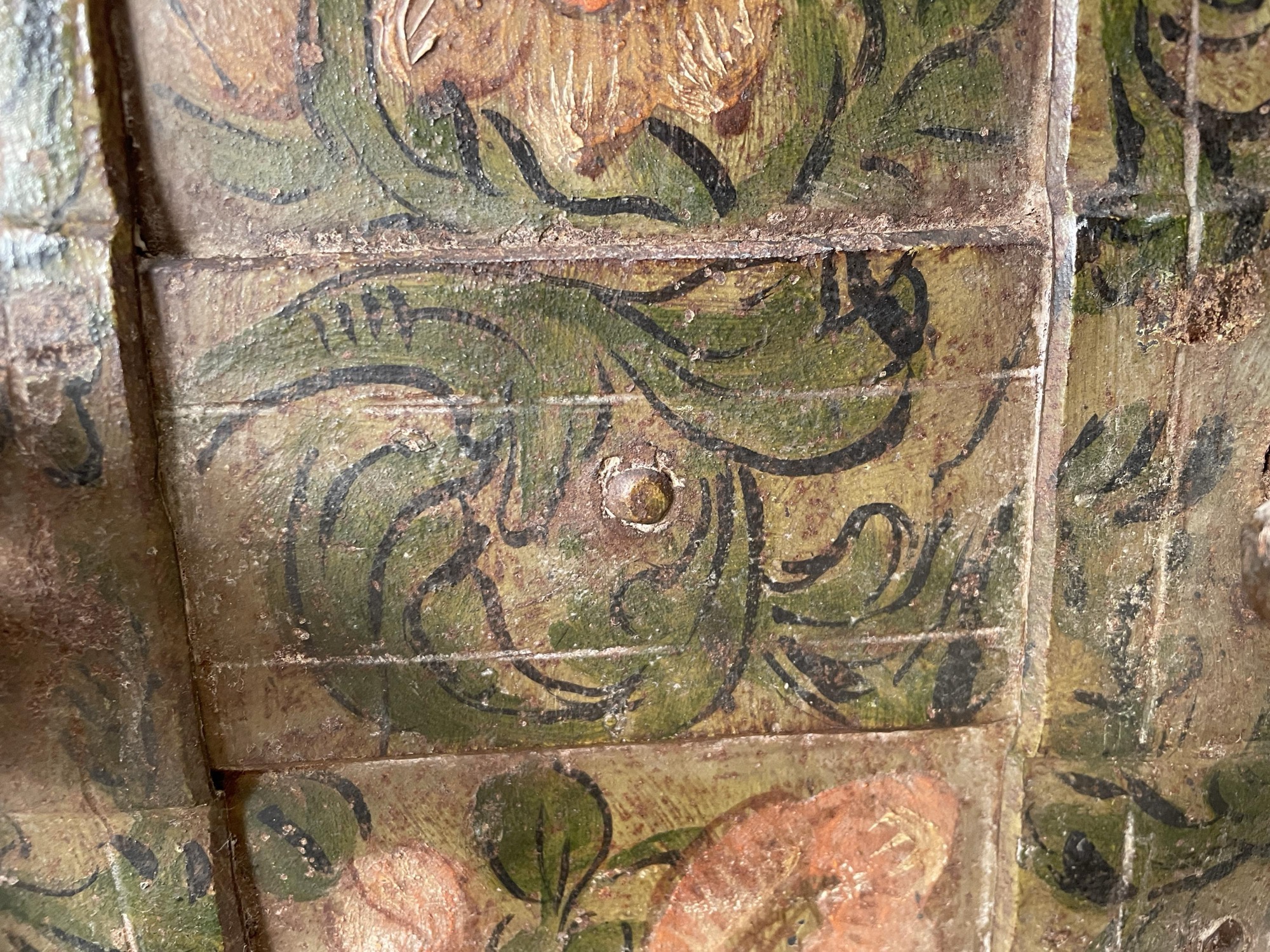
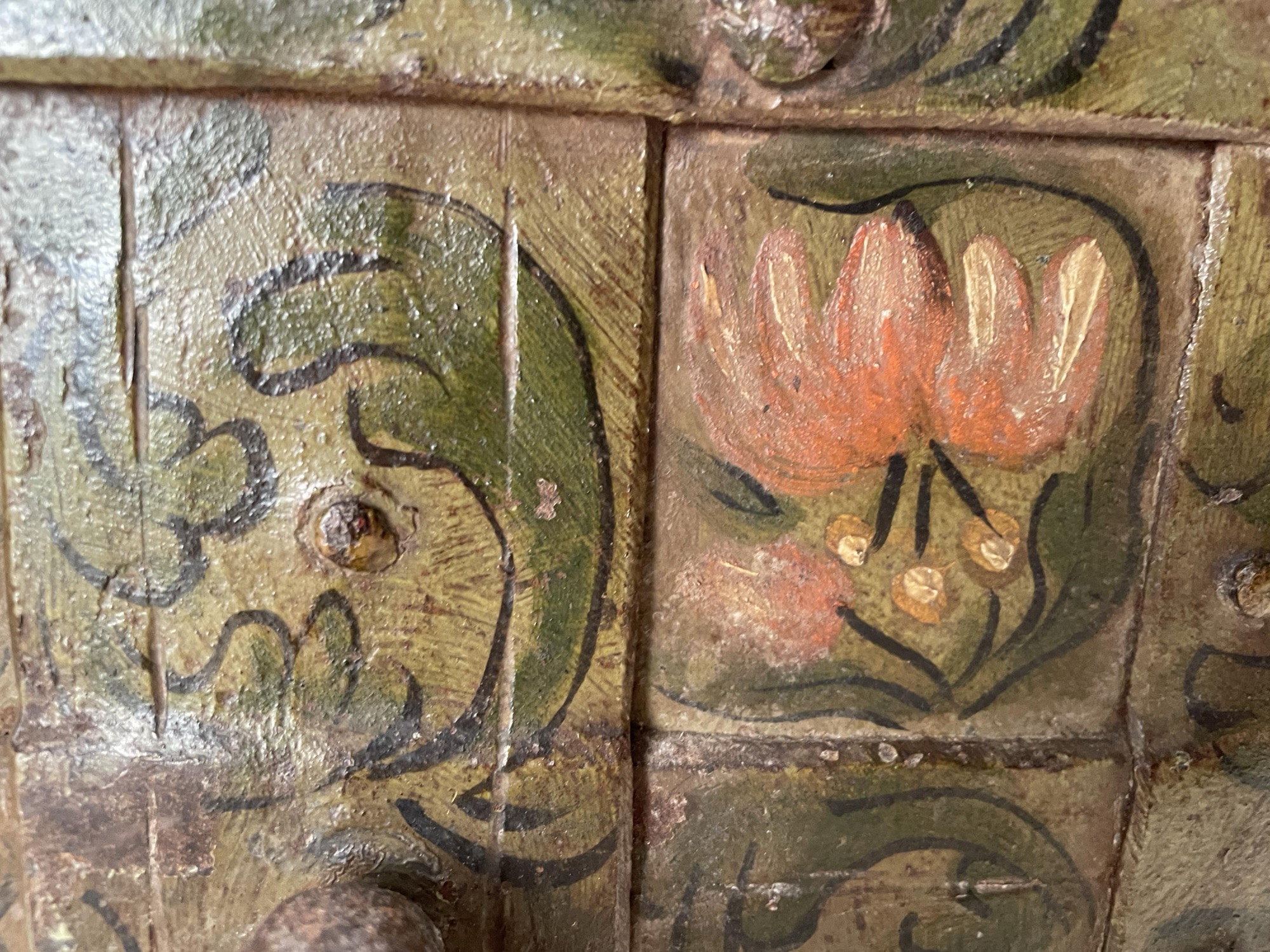
The rectangular iron body is richly decorated with naïve polychrome painting arranged in characteristic floral and landscape vignettes. While such painted decoration is a defining feature of these early transportable safes, survival is typically fragmentary due to constant handling and movement. In this example, the paint has survived in exceptional condition, particularly to the sides, strongly indicating that the strongbox has seen relatively limited relocation during its working life, a rare and significant attribute.
The escutcheon is surmounted by a ducal coronet, an exceptionally uncommon feature that firmly indicates manufacture for a noble patron of ducal rank. Such explicit heraldic signifiers are seldom encountered on surviving examples and elevate this strongbox well above the more commonly encountered merchant or civic models.
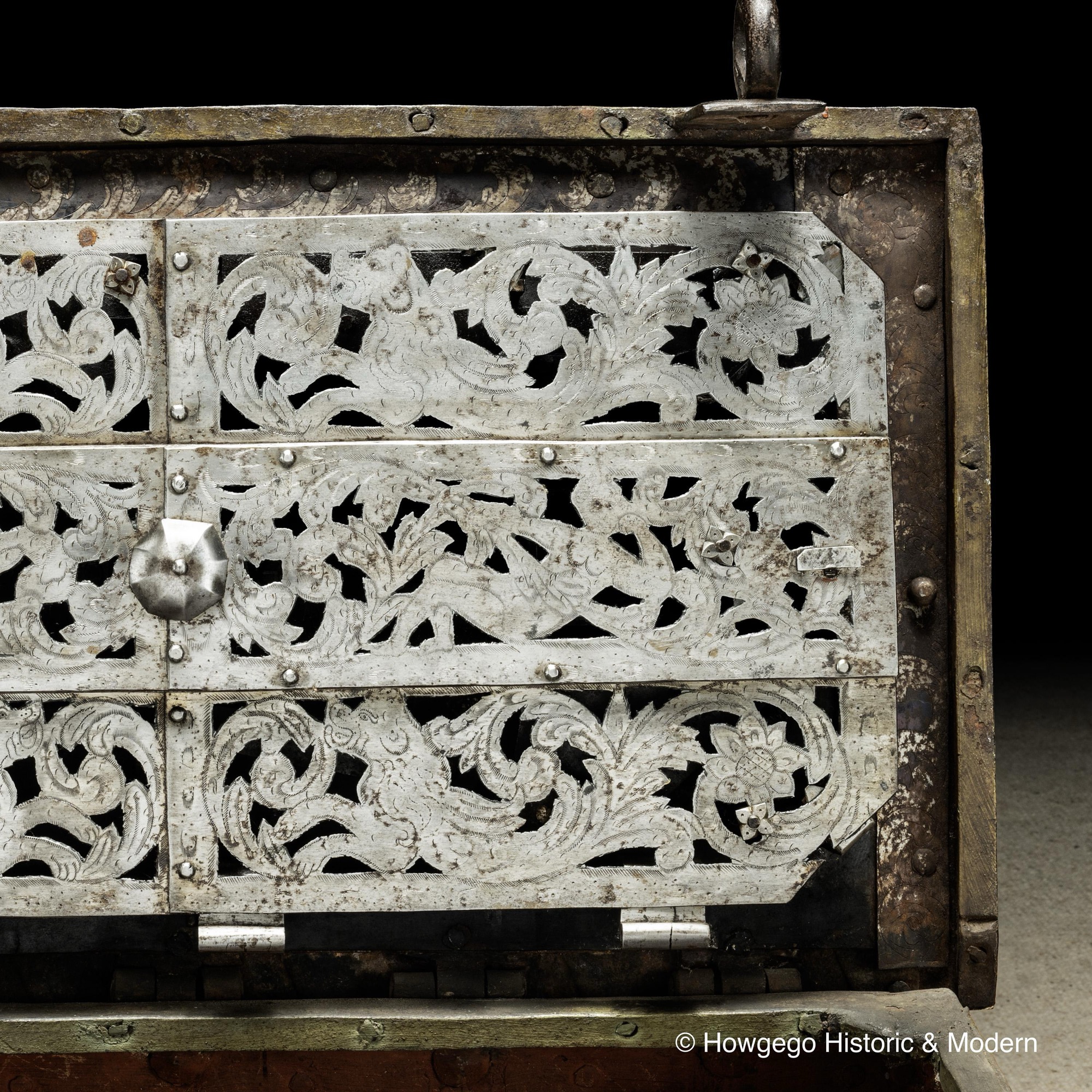
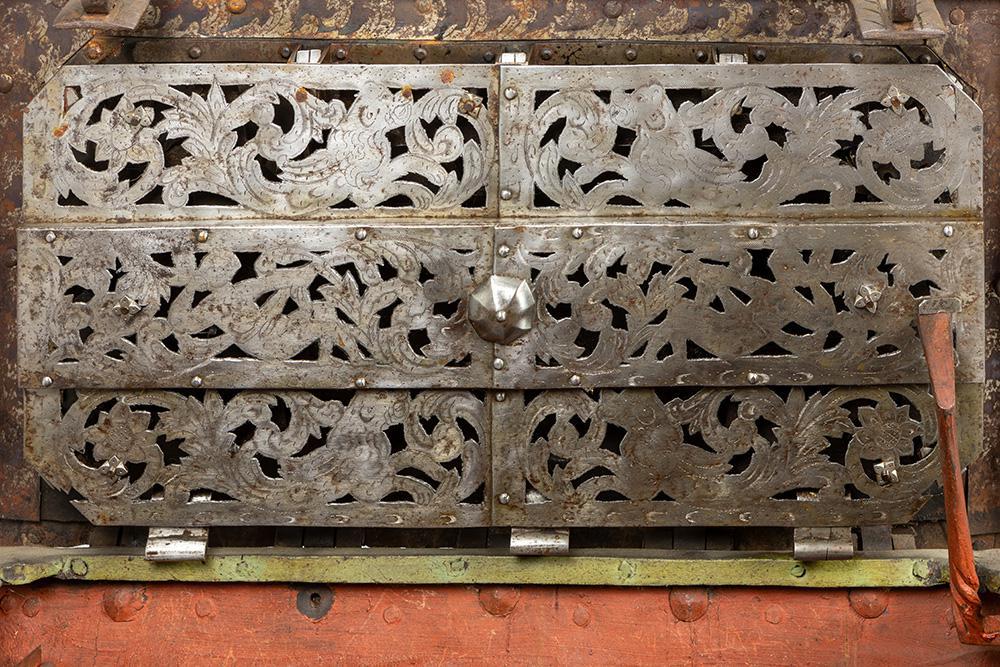
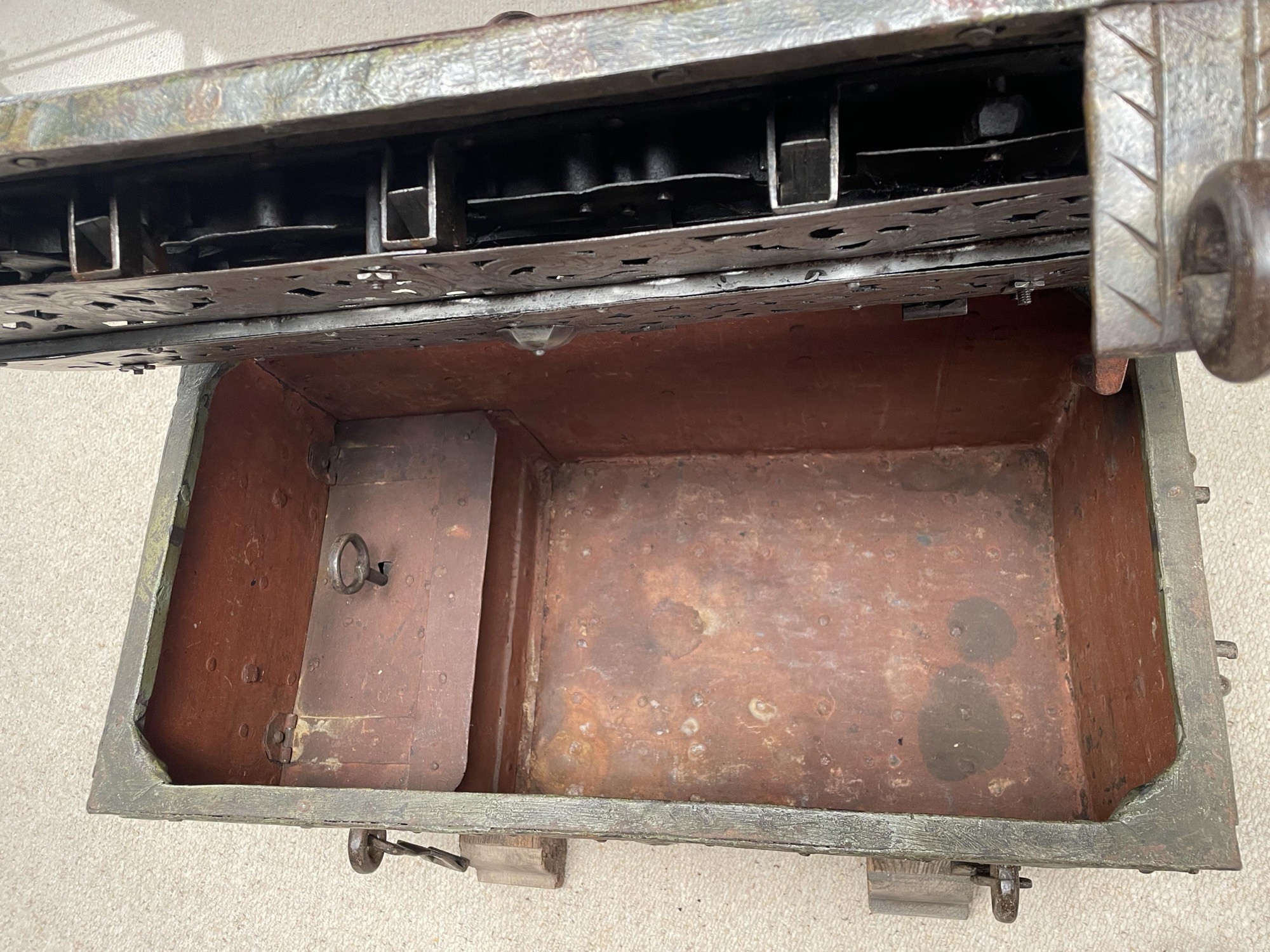
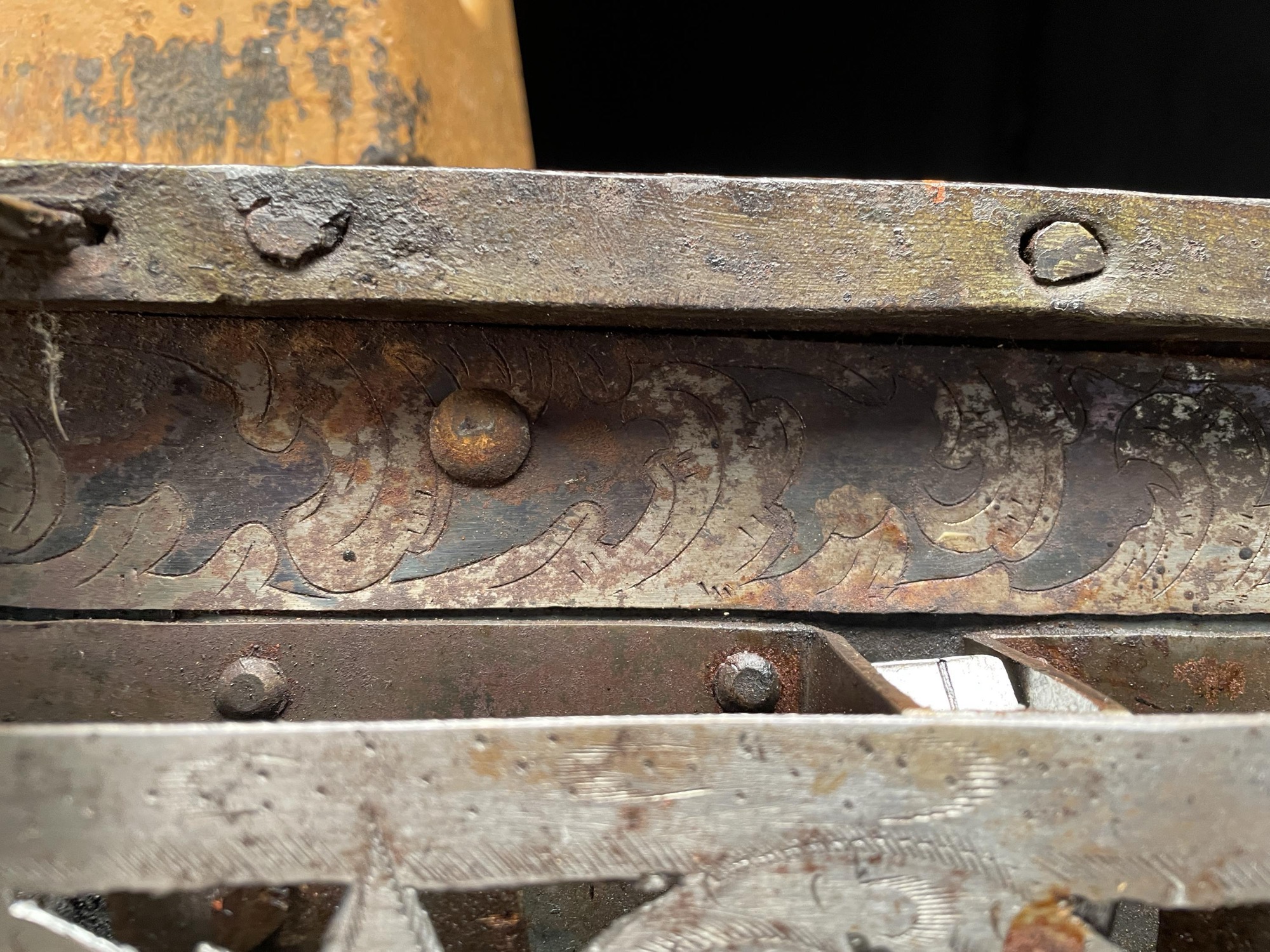
The lockplate is particularly noteworthy, being chased with pairs of dogs and mermen, motifs rarely encountered in combination and suggestive of loyalty, guardianship, and dominion over land and sea, highly appropriate symbolism for an elite travelling safe. The chased leaf border surrounding the inner lid is an exceptional and, to the present author's knowledge, undocumented feature among comparable examples, underscoring the bespoke nature of the commission.
Function and Mechanism
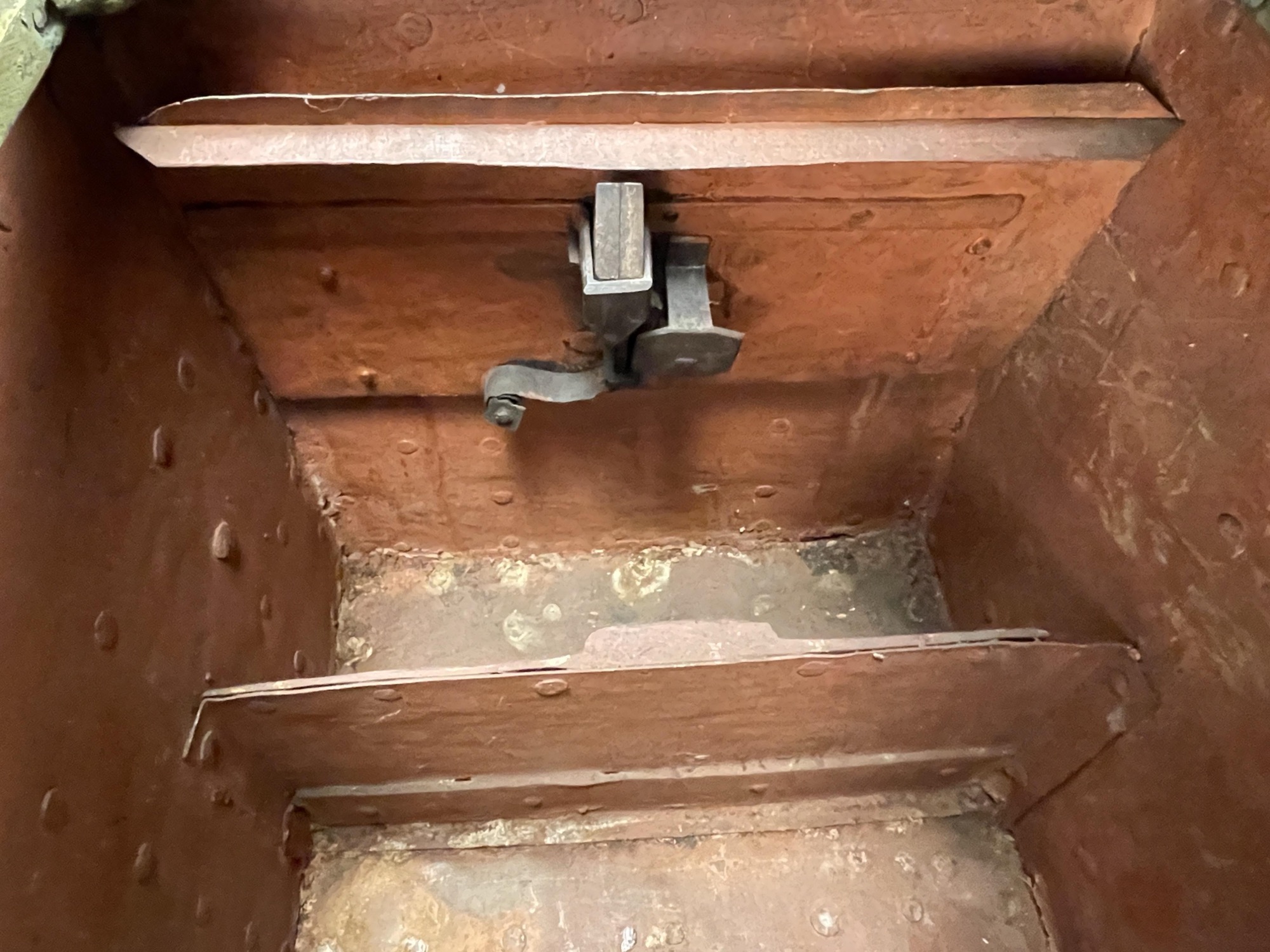
The lock mechanism remains in full working order, allowing the strongbox to perform its original function as a secure repository. Strongboxes of this type were used to safeguard not only money, gold, and jewellery, but also legal documents, correspondence, and private papers, making them indispensable to noble and mercantile households during travel and periods of political or economic uncertainty.
Context
Nuremberg was one of the foremost centres of metalworking in late-Renaissance Europe, renowned for its production of complex locks, armour, and precision ironwork. "Armada" strongboxes represent some of the earliest forms of portable safes, combining robust construction with decorative ambition. Examples made for the nobility, particularly those bearing explicit ducal insignia, are extremely rare, and the survival of both original paint and a fully functioning lock places this strongbox among the finest of its type.
Modern Use
While retaining its historical integrity, the strongbox adapts naturally to modern use, functioning as a secure safe, storage chest, or a striking coffee or sofa table, its sculptural form and painted surfaces lending depth and authority to both traditional and contemporary interiors.
Provenance
Private Collection, Belgium.
Dimensions
Strongbox:
Length: 81 cm., 32"
Depth: 45 cm., 18"
Height: 44 cm., 17½ "
Height on sledge feet: 53 cm., 21"