AN EXCEPTIONAL SPANISH COLONIAL VARGUEÑO OR BARGUEÑO, tortoiseshell, ebony, engraved ivory and Colonial hardwood, Spain, late 16th / early 17th century (cabinet)
11940
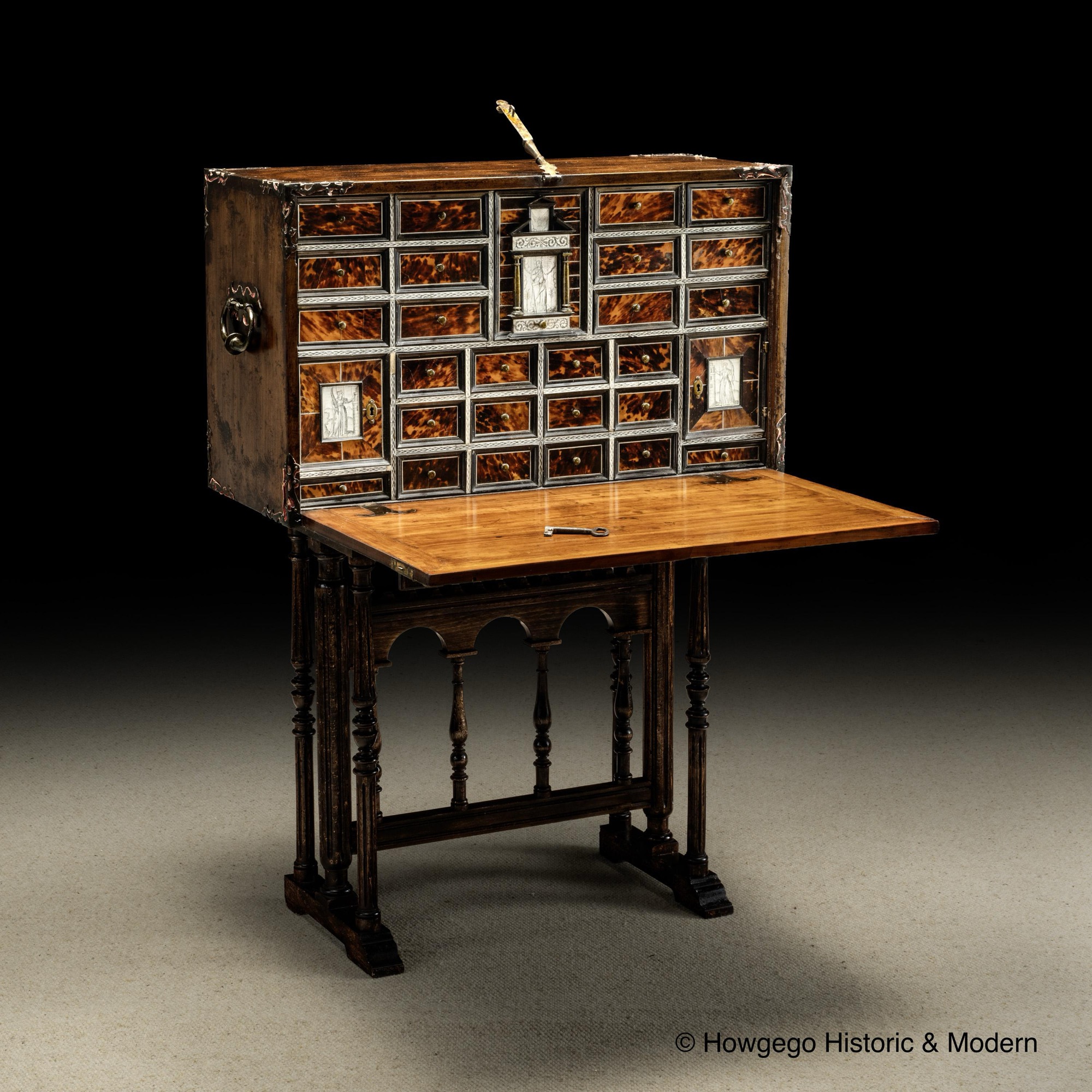
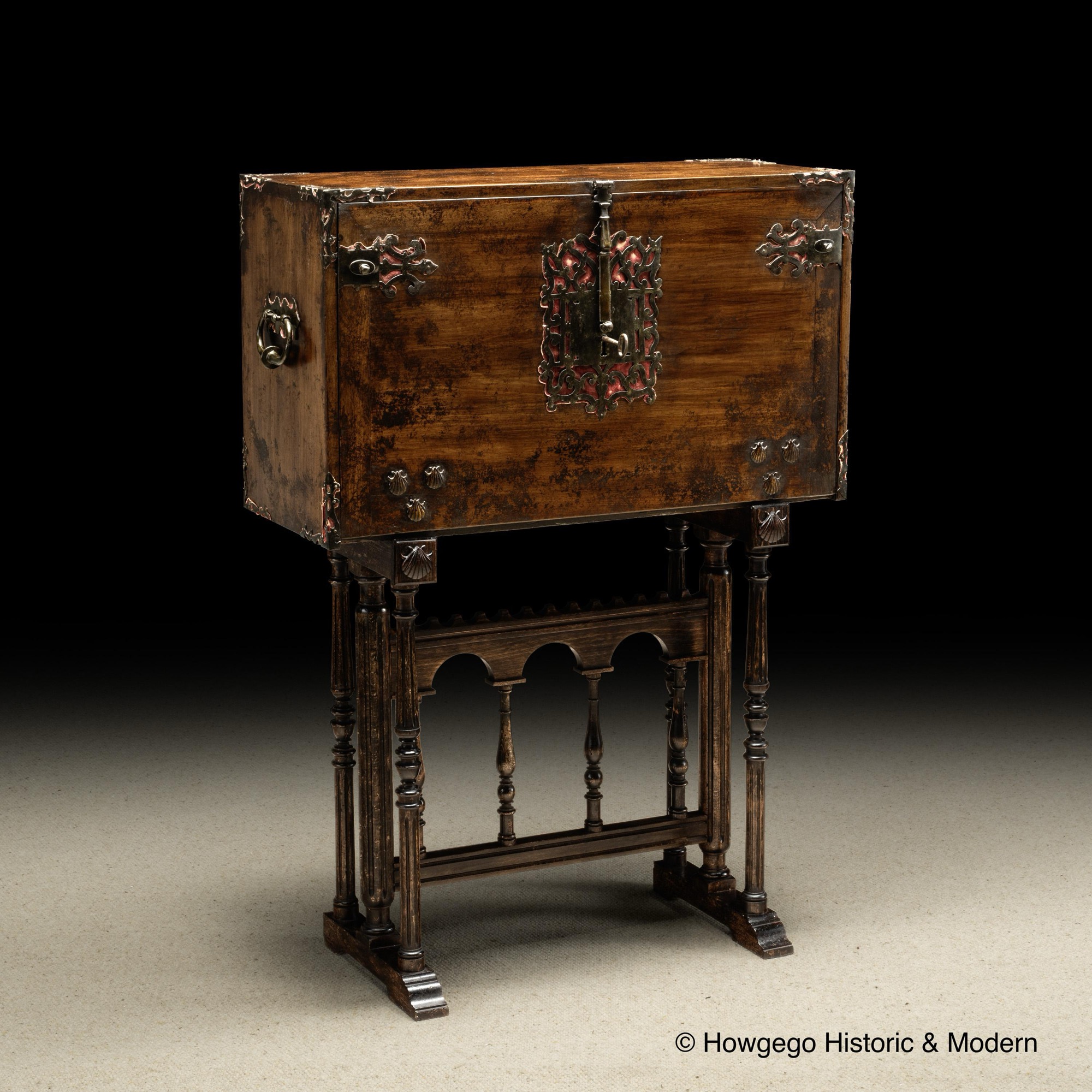
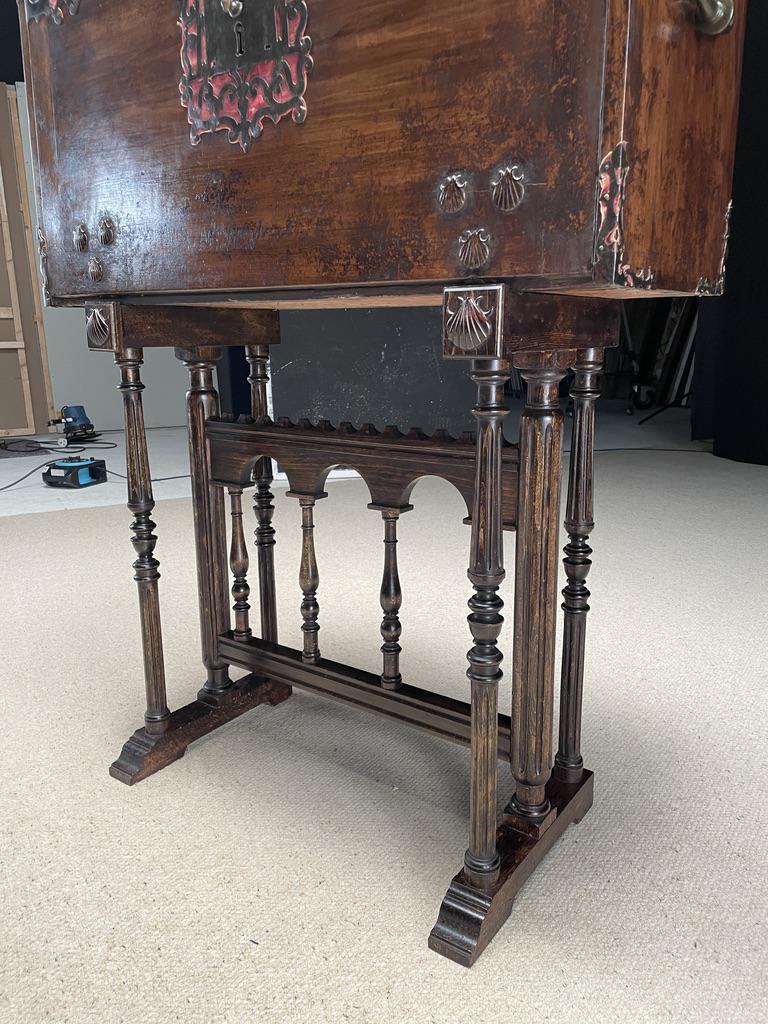
An exceptional and unusually richly appointed Spanish vargueño of the highest quality, lavishly inlaid with tortoiseshell and engraved ivory, mounted with ebony mouldings and decorative ironwork, and incorporating an iconographically sophisticated interior programme. The cabinet stands on a characteristic 19th-century turned vargueño stand.
Exterior
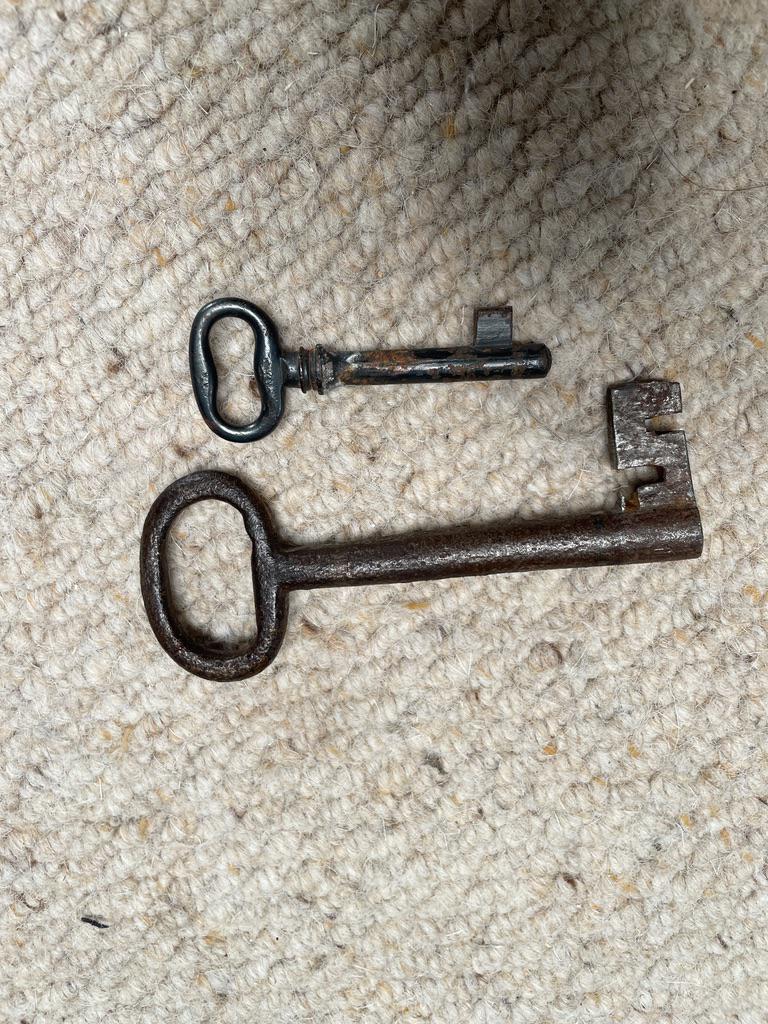
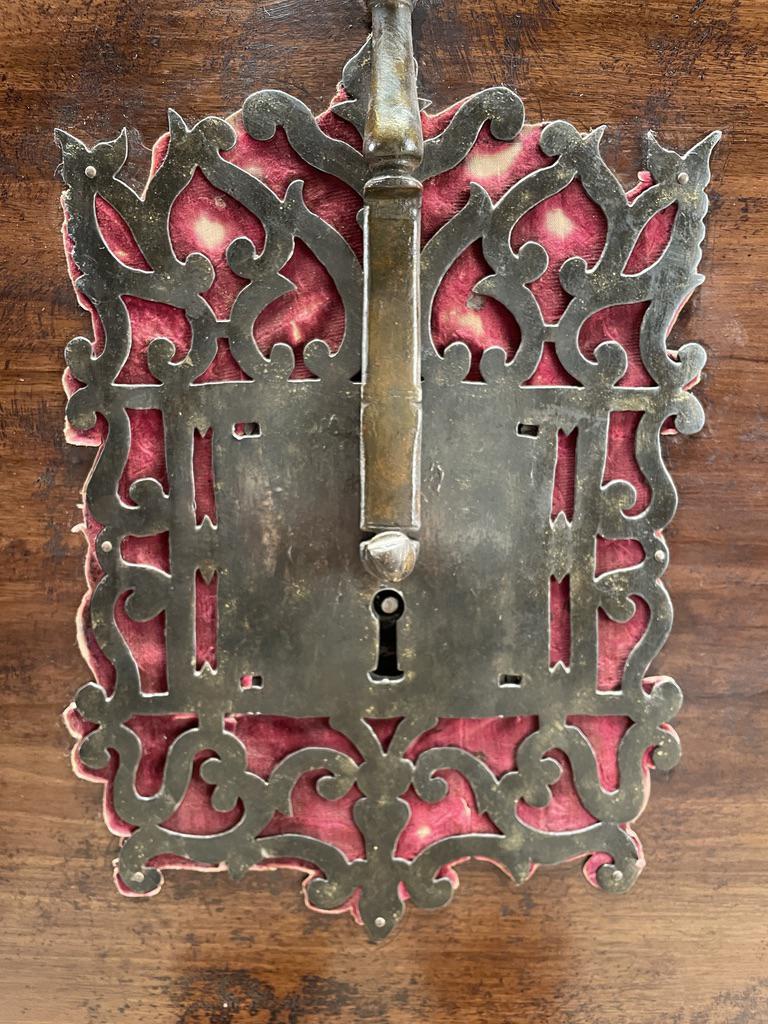
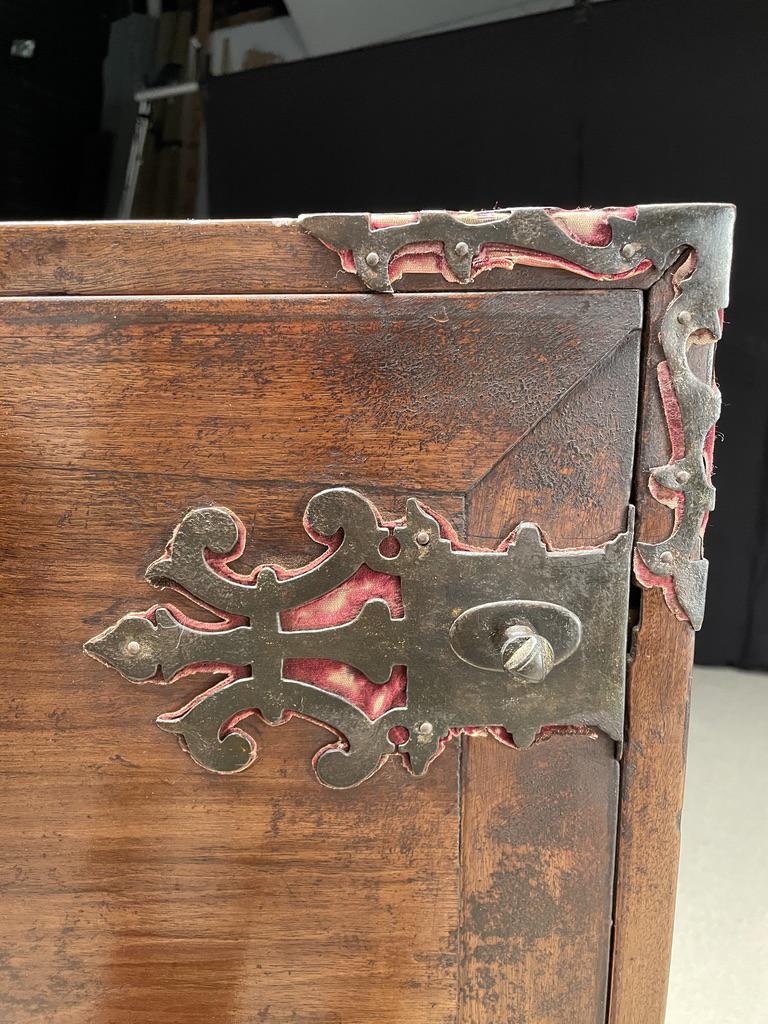
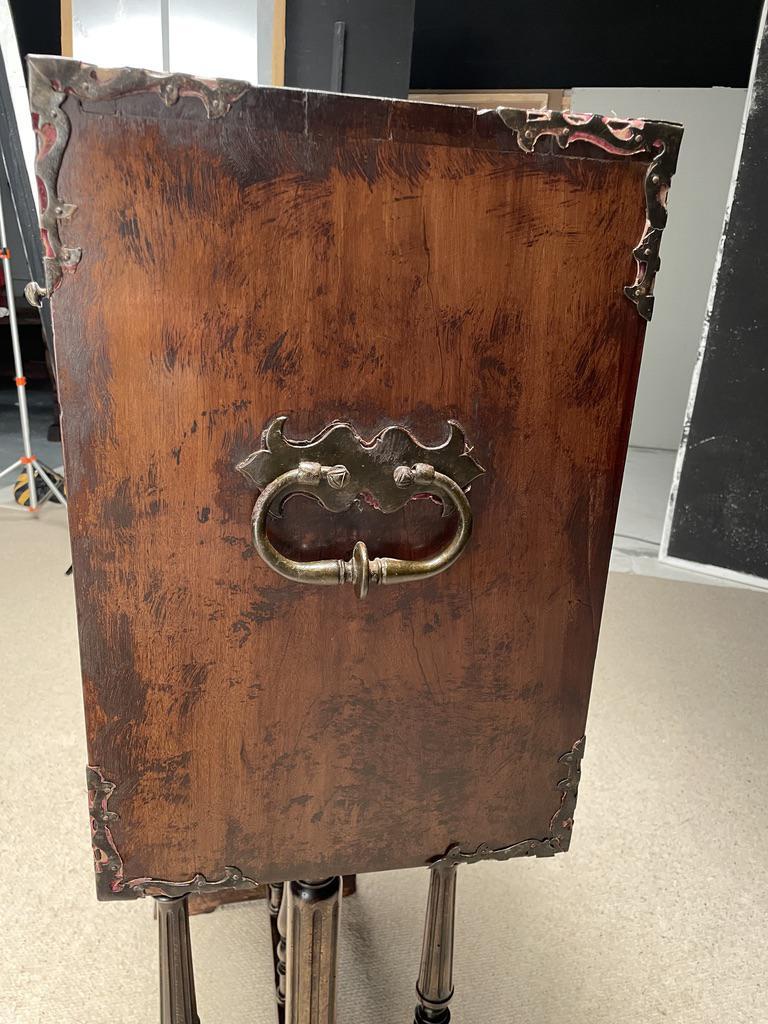
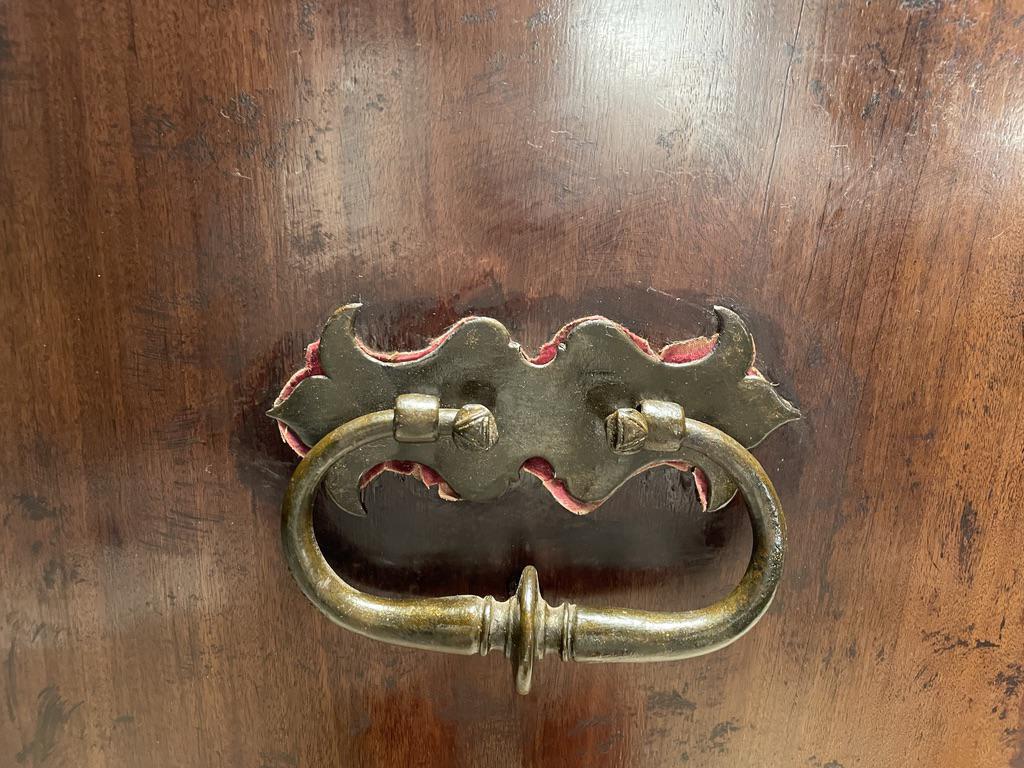
The exterior centred by an unusually large and finely forged iron lockplate, retaining its original key. The fall-front secured by original iron catches, the corners reinforced with decorative iron banding. The metalwork is deliberately backed by its original red velvet lining, conceived as a striking chromatic foil to the ironwork and a further expression of luxury and visual theatre. The sides fitted with original iron carrying handles, underscoring the portable function of the form.
Interior
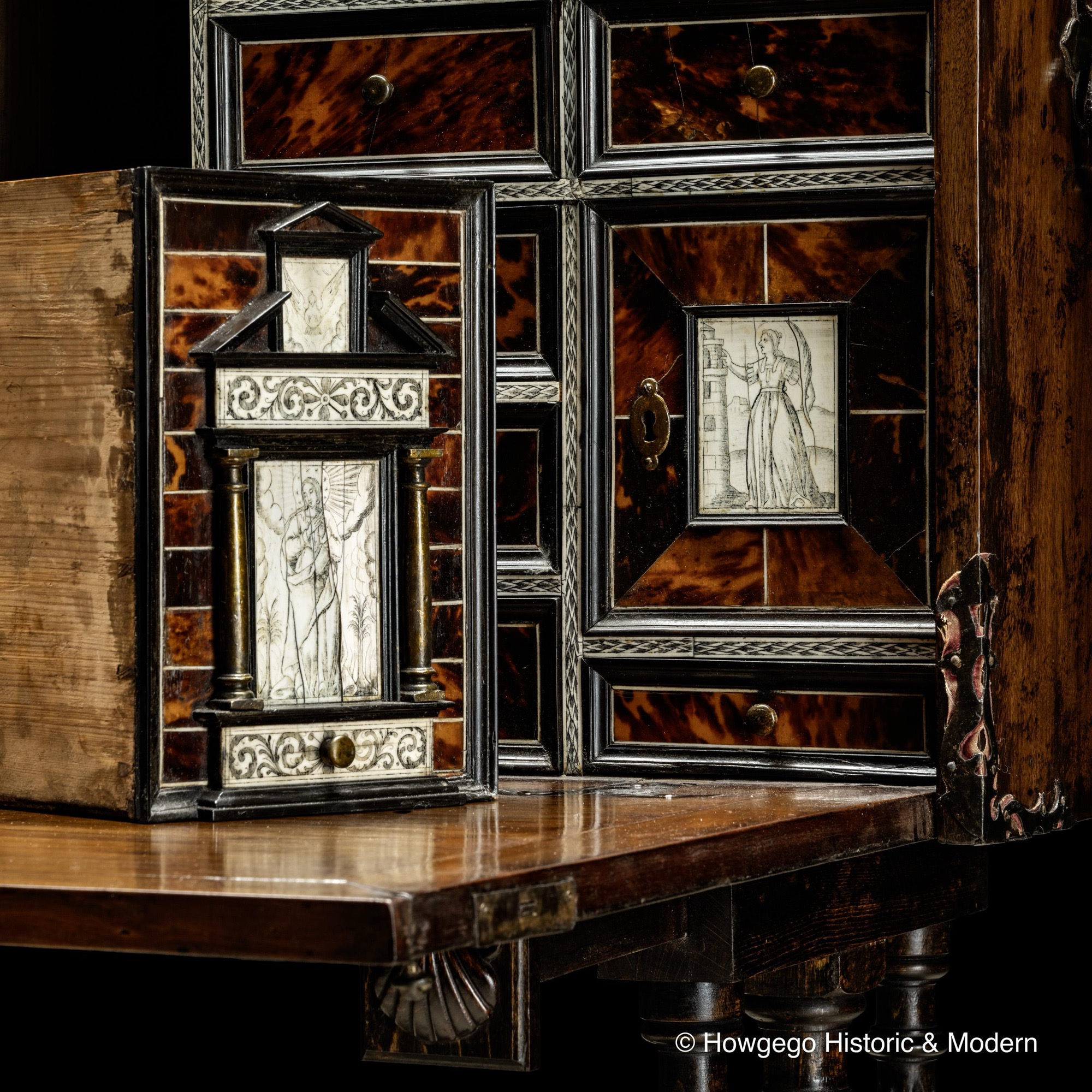
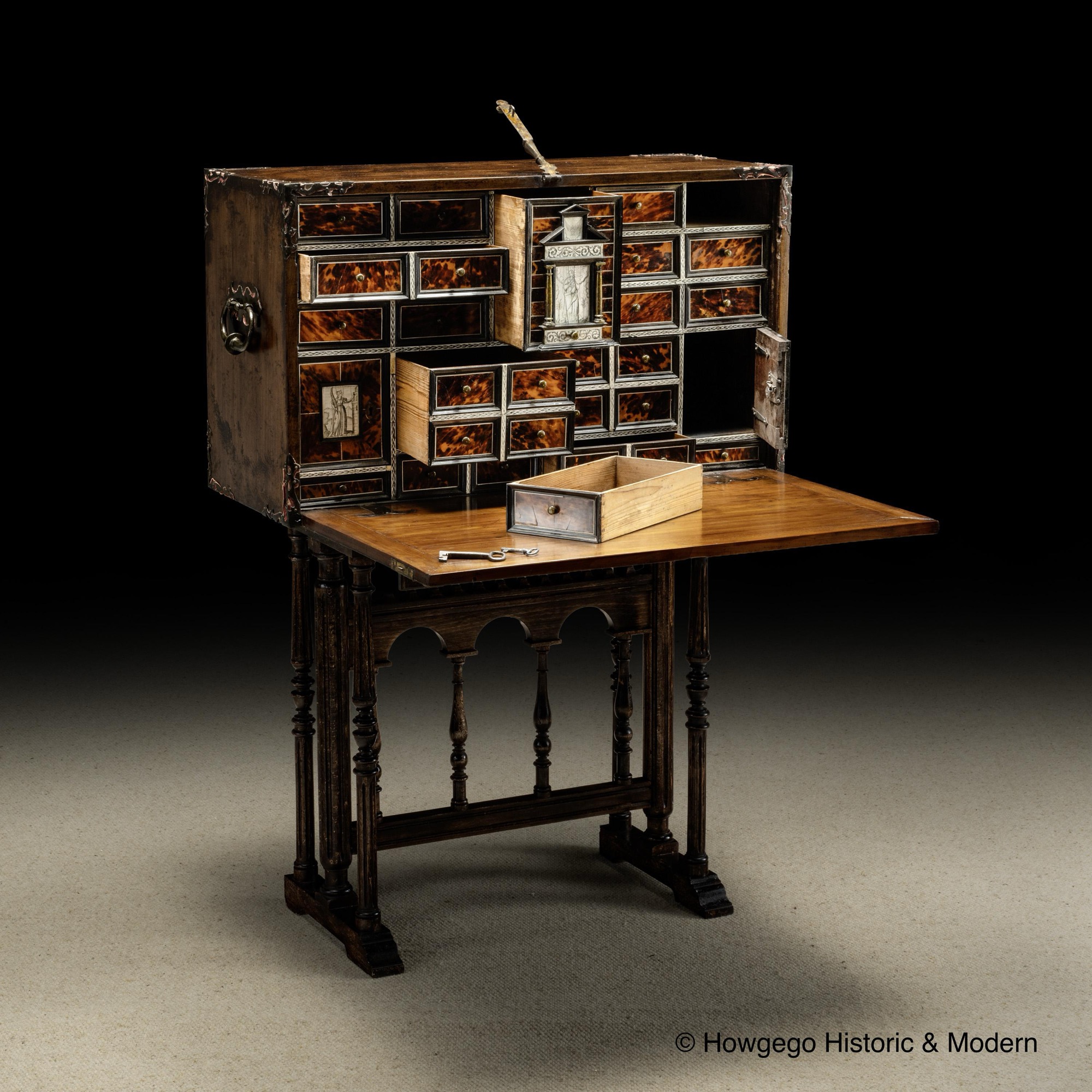
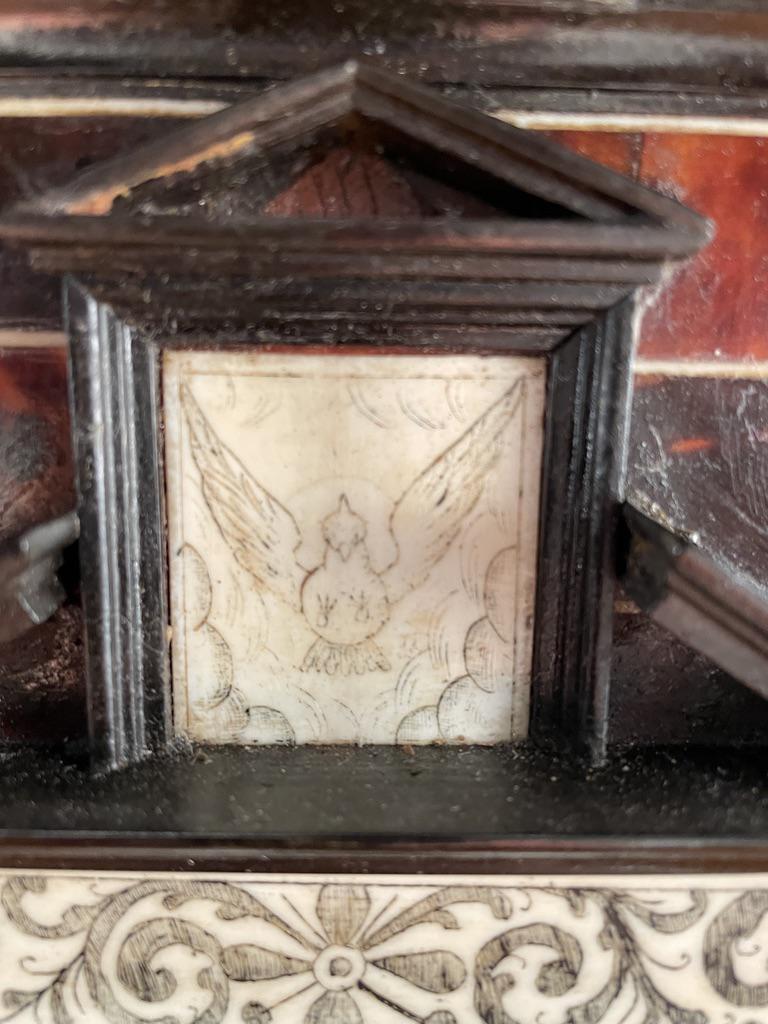
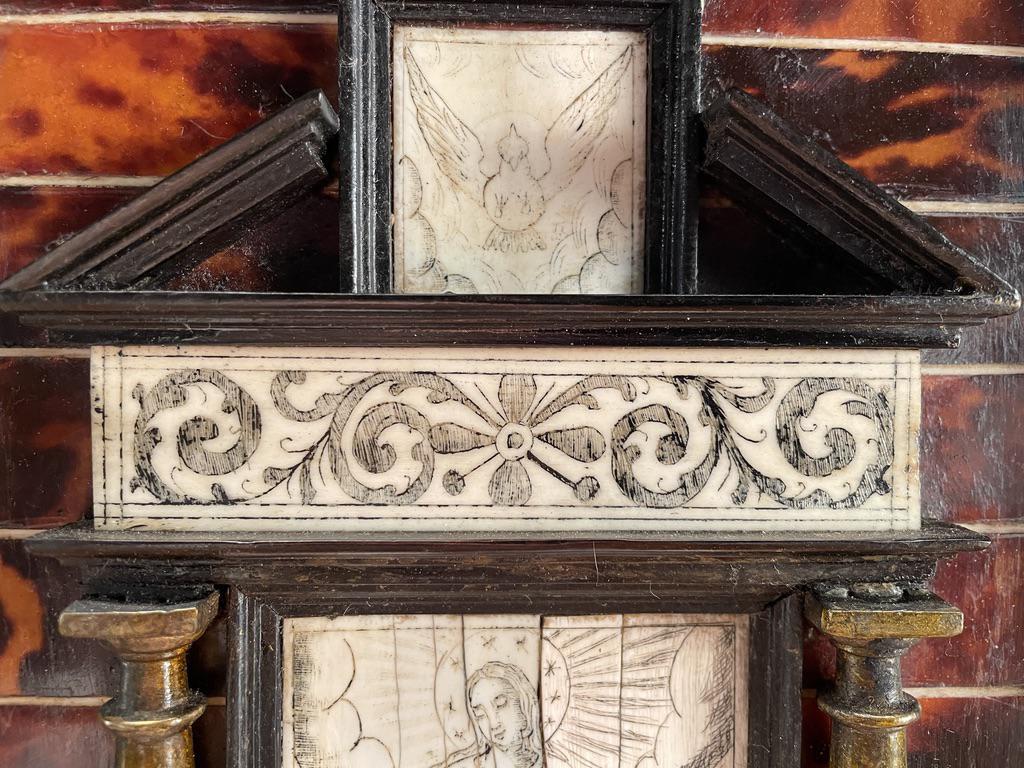
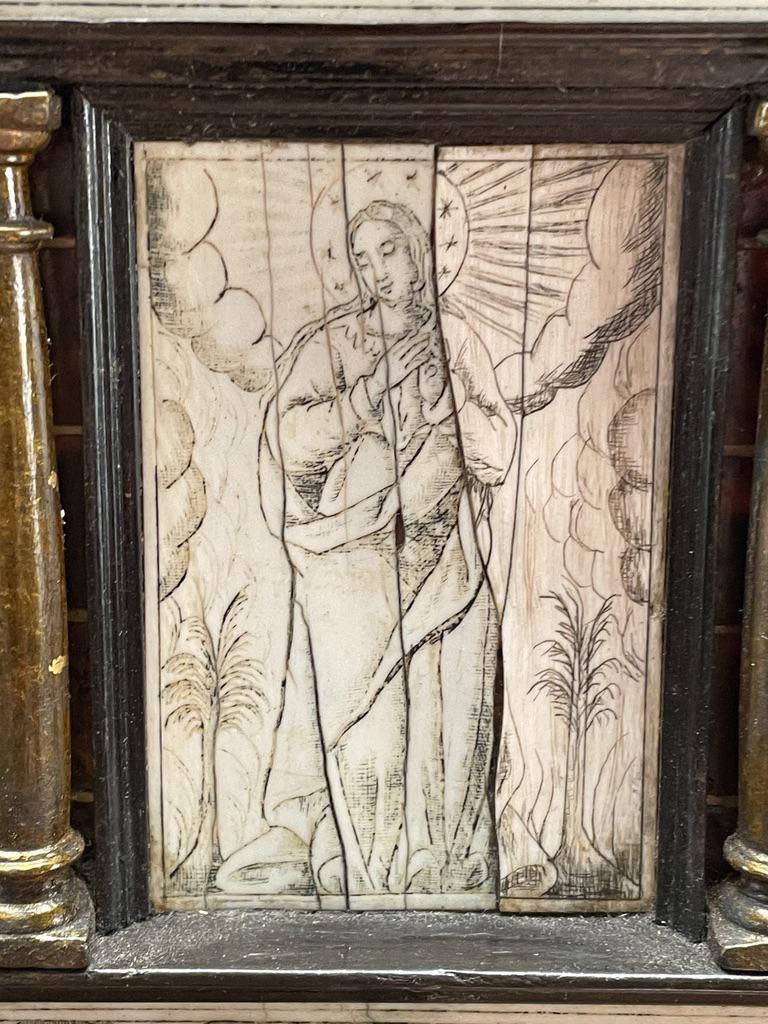
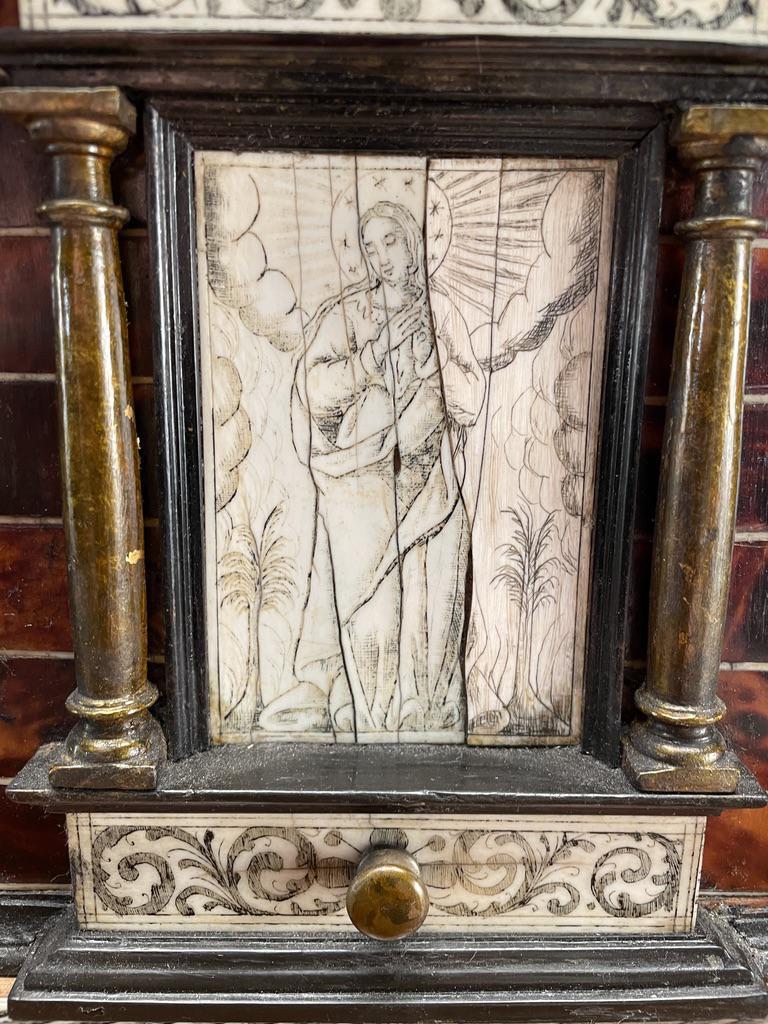
The interior arranged architecturally around a central portico concealing a large drawer, richly inlaid with tortoiseshell and ivory stringing and framed by ebony mouldings and a pair of gilded classical columns. The portico incorporates four finely etched ivory panels. Surmounted by a sculptural dove. Beneath runs a stylised floral and acanthus-leaf frieze. Below an engraved ivory panel depicts the Virgin Mary in prayer within an exoticised landscape, repeated below by the same acanthus frieze, creating a vertical devotional axis at the heart of the cabinet.
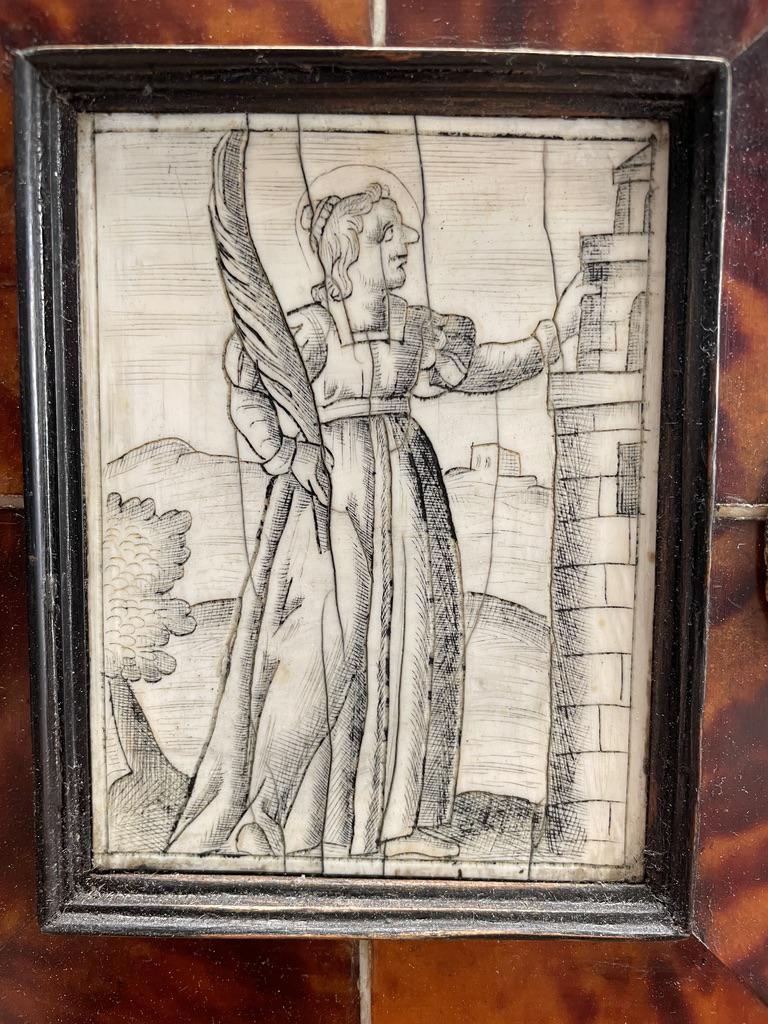
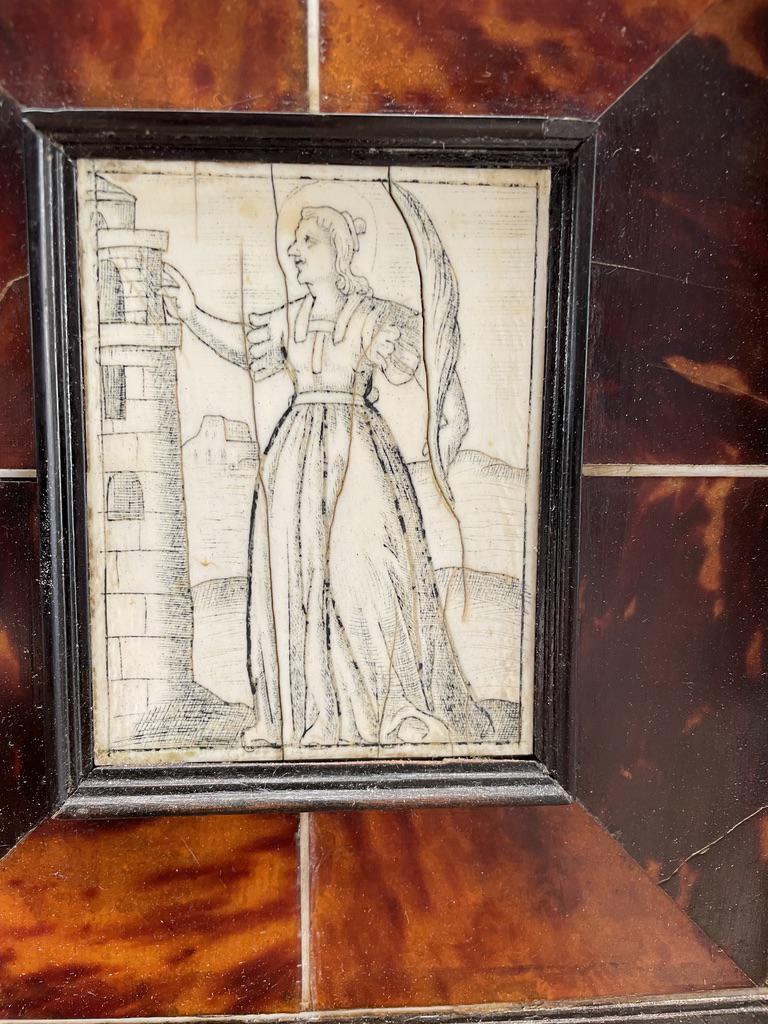
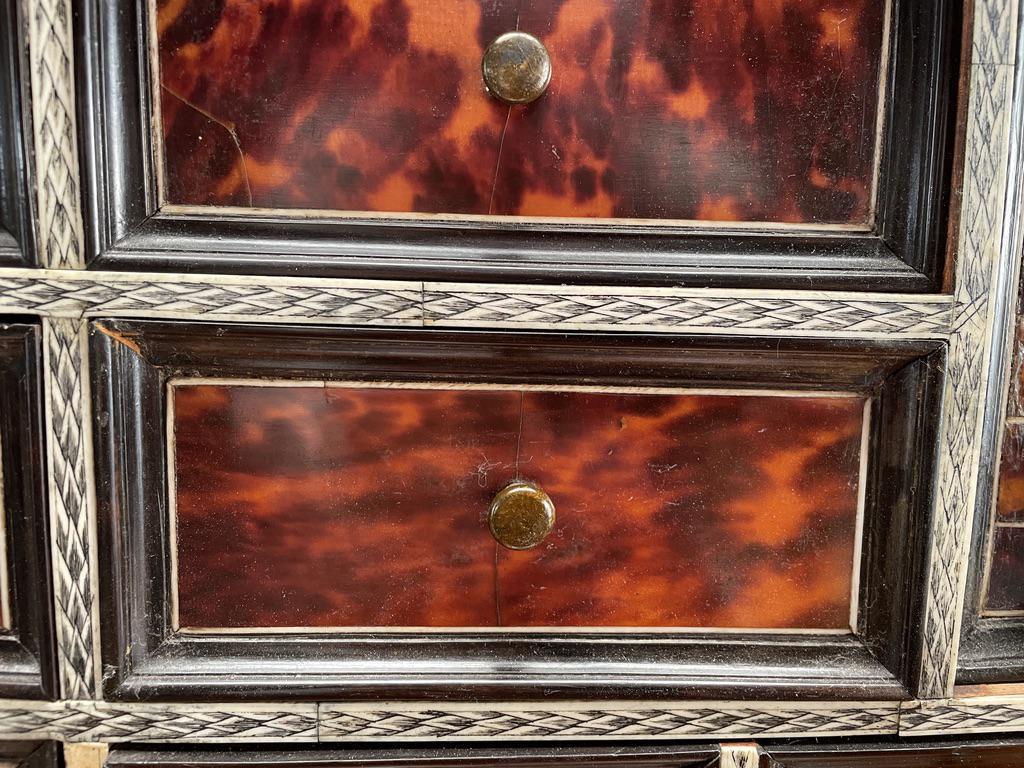
Flanking the central section are six drawers to either side, each with tortoiseshell fronts edged with ivory banding and ebony mouldings. Below, on either side, two large drawers cleverly simulate four smaller drawers, with two further small drawers beneath, demonstrating both technical virtuosity and a taste for visual complexity typical of elite vargueños. To either side of the lower register are cupboards fitted with inset engraved ivory panels depicting Saint Lucia, shown holding a palm frond in her right hand, the traditional symbol of Christian martyrdom, representing her triumph of faith over persecution following her execution in AD 304 for refusing to renounce Christianity. Her left hand rests upon a stone tower, an attribute associated with steadfastness, protection, and dominion.
The inclusion of Saint Lucia may also carry a more oblique material reference. By the early modern period, European colonial expansion into the Caribbean had created trade networks through which tortoiseshell entered Europe from islands including Saint Lucia. Spain claimed sovereignty over the island in the early 16th century; early Spanish navigators are believed to have named it Sancta Lucia, and a Vatican globe of the 1520s already records the name, predating French colonisation in 1650-51. While speculative, the association between saint, place, and precious material may have held layered meaning for a learned patron. Research is underway on this.
Materials and Technique
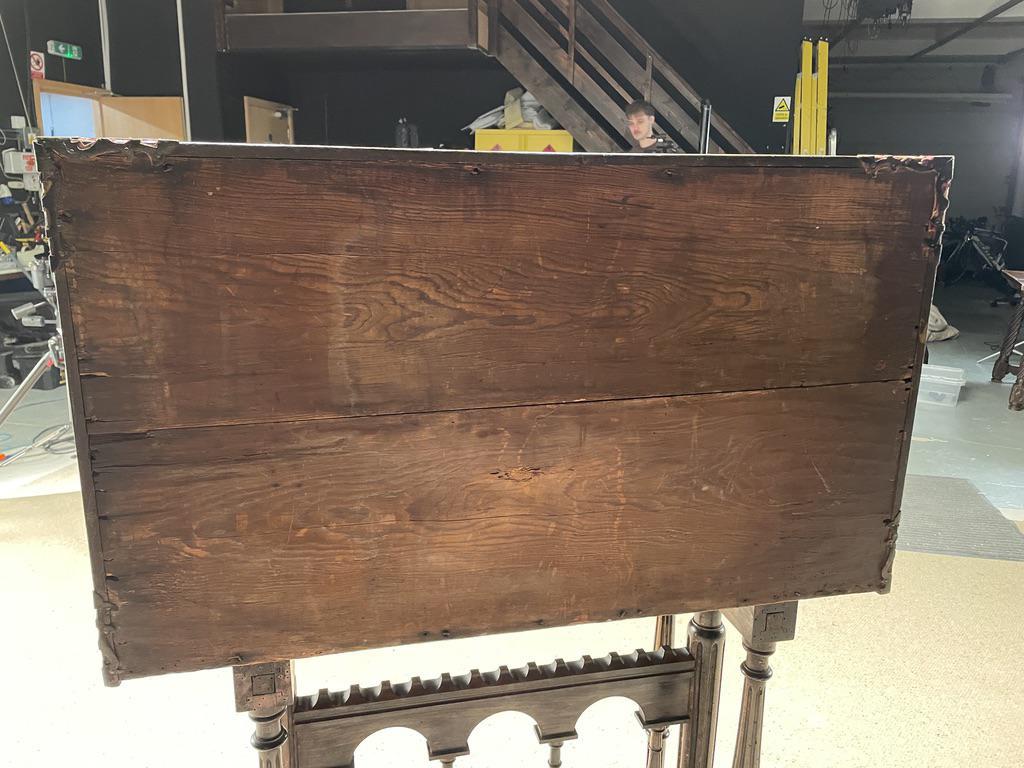
The cabinet is constructed from an as-yet unidentified colonial hardwood, likely imported via Iberian trade routes. The use of tortoiseshell, engraved ivory, and ebony places this vargueño firmly at the very apex of production, intended for an elite and highly educated clientele.
The engraved ivory panels appear to derive from 15th- and 16th-century Northern European prints. Their line quality, figural proportions, and landscape treatment strongly suggest a graphic source transmitted through engravings circulating widely in Spain during the Renaissance. Research is currently underway to identify the specific engraved prototypes.
Context
Spanish vargueños (also known as bargueños) crafted from luxury materials such as tortoiseshell, ebony, and engraved ivory represent the most prestigious category of Renaissance Spanish furniture. These objects were highly sought after during the Spanish Golden Age and are closely associated with aristocratic, courtly, and ecclesiastical patronage (Aguiló Alonso, 1993).
Aguiló Alonso has traced the form and function of the vargueño to the Hispano-Islamic chest, adapted into a portable writing desk whose richly ornamented interior served both practical and symbolic functions. While many vargueños feature painted and gilded interiors, examples incorporating tortoiseshell and ivory represent the most expensive and technically ambitious productions.
Stand
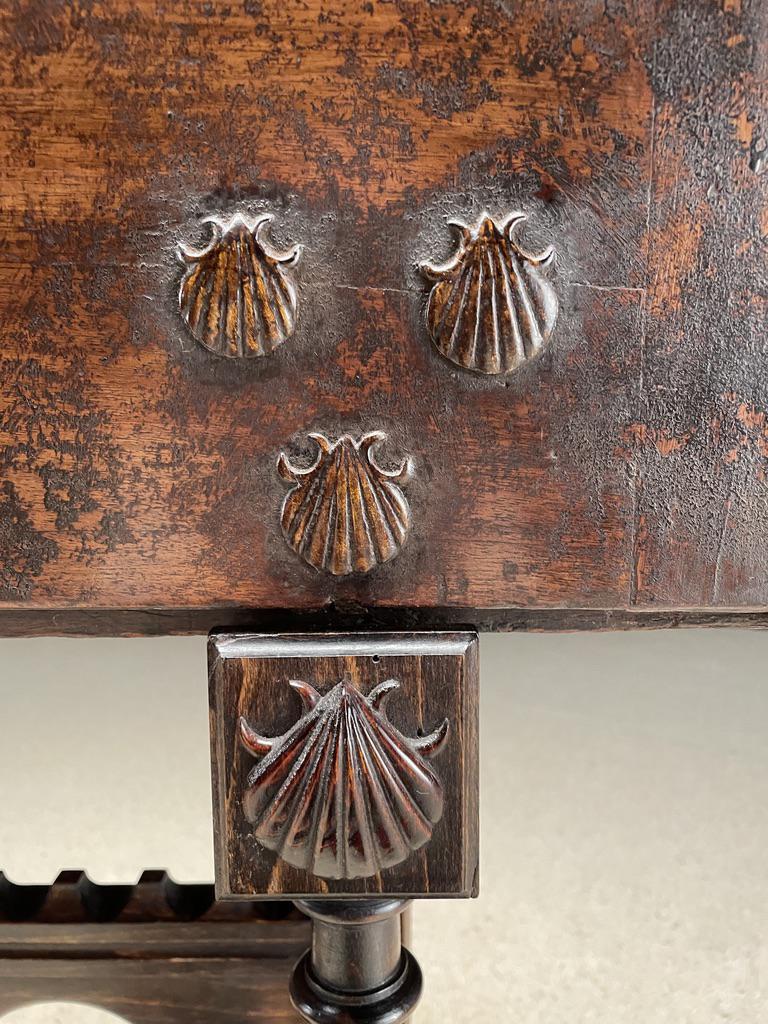
The cabinet rests on a 19th-century turned stand of characteristic vargueño form, made to elevate and display the cabinet in accordance with later collecting tastes.
Patronage, Scale, and Intended Use
This vargueño is notably more petite in scale than is typical for the form, a characteristic that materially informs its interpretation. While vargueños were inherently portable objects, the reduced dimensions of this example suggest an object conceived for particularly close and frequent travel, reinforced by the survival of its original carrying handles. Such scale implies a cabinet intended to accompany its owner rather than remain as a fixed furnishing within a single interior.
The refined proportions may equally point to a highly personal commission, potentially made for a female patron. Smaller, portable writing and devotional cabinets were often preferred for private use, and the combination of reduced scale, exceptional material refinement, and pronounced devotional iconography supports the possibility that this vargueño served as an intimate object of personal devotion, correspondence, and safekeeping.
At the same time, the prominent and repeated depiction of Saint Lucia invites a further reading. Beyond her significance as a Christian martyr, Saint Lucia may allude to the Caribbean island of the same name, a territory claimed by Spain in the early 16th century and closely associated with colonial trade networks through which precious materials such as tortoiseshell entered Europe. In this context, the cabinet may have been commissioned for a noble or gentleman with personal, mercantile, or administrative interests in Saint Lucia or the wider Spanish colonial world. Luxury vargueños frequently functioned as markers of status and identity, embedding personal affiliations and worldly reach within their iconography.
Taken together, the cabinet's compact scale, portable form, devotional imagery, and materially resonant symbolism strongly suggest a bespoke elite commission, conceived as a portable locus of faith, intellect, and personal identity. Rather than pointing to a single narrative, these intertwined factors reflect the complex ways in which Renaissance luxury objects could accommodate devotion, travel, gendered use, and global ambition within a single, highly refined work.
Provenance
Private Collection. Purchased Sotheby's, London, The Luigi Koelliker Studio: Works of Art from the London Residence of Luigi Koelliker, 3 December 2008, lot 152.
Luigi Koelliker, the Milanese collector, was among the most discerning and influential collectors of his generation, a renowned patron of the arts and an enthusiastic connoisseur whose collection reflected exceptional scholarship and taste.
Vargueno length 94cm., 37", Depth 38cm, 14½" deep, Height 56cm, 22"
Total height 134cm, 53"
Stand Length 72cm. 28½", depth 36cm, 14¼" Height 78cm., 30¾"
Legal Notice
Prospective purchasers are advised that several countries prohibit or restrict the importation of property containing materials derived from endangered species, including but not limited to ivory and tortoiseshell. Prospective purchasers should familiarise themselves with all relevant customs and wildlife regulations prior to importation.




 crafted from luxury materials such as tortoiseshell, ebony, and engraved ivory represent the most prestigious category of Renaissance Spanish furniture. These objects were highly sought after during the Spanish Golden Age and are closely associated with aristocratic, courtly, and ecclesiastical patronage (Aguiló Alonso, 1993).Aguiló Alonso has traced the form and function of the vargueño to the Hispano-Islamic chest, adapted into a portable writing desk whose richly ornamented interior served both practical and symbolic functions. While many vargueños feature painted and gilded interiors, examples incorporating tortoiseshell and ivory represent the most expensive and technically ambitious productions.StandThe cabinet rests on a 19th-century turned stand of characteristic vargueño form, made to elevate and display the cabinet in accordance with later collecting tastes.Patronage, Scale, and Intended UseThis vargueño is notably more petite in scale than is typical for the form, a characteristic that materially informs its interpretation. While vargueños were inherently portable objects, the reduced dimensions of this example suggest an object conceived for particularly close and frequent travel, reinforced by the survival of its original carrying handles. Such scale implies a cabinet intended to accompany its owner rather than remain as a fixed furnishing within a single interior.The refined proportions may equally point to a highly personal commission, potentially made for a female patron. Smaller, portable writing and devotional cabinets were often preferred for private use, and the combination of reduced scale, exceptional material refinement, and pronounced devotional iconography supports the possibility that this vargueño served as an intimate object of personal devotion, correspondence, and safekeeping.At the same time, the prominent and repeated depiction of Saint Lucia invites a further reading. Beyond her significance as a Christian martyr, Saint Lucia may allude to the Caribbean island of the same name, a territory claimed by Spain in the early 16th century and closely associated with colonial trade networks through which precious materials such as tortoiseshell entered Europe. In this context, the cabinet may have been commissioned for a noble or gentleman with personal, mercantile, or administrative interests in Saint Lucia or the wider Spanish colonial world. Luxury vargueños frequently functioned as markers of status and identity, embedding personal affiliations and worldly reach within their iconography.Taken together, the cabinet's compact scale, portable form, devotional imagery, and materially resonant symbolism strongly suggest a bespoke elite commission, conceived as a portable locus of faith, intellect, and personal identity. Rather than pointing to a single narrative, these intertwined factors reflect the complex ways in which Renaissance luxury objects could accommodate devotion, travel, gendered use, and global ambition within a single, highly refined work.ProvenancePrivate Collection. Purchased Sotheby's, London, The Luigi Koelliker Studio: Works of Art from the London Residence of Luigi Koelliker, 3 December 2008, lot 152.Luigi Koelliker, the Milanese collector, was among the most discerning and influential collectors of his generation, a renowned patron of the arts and an enthusiastic connoisseur whose collection reflected exceptional scholarship and taste.Vargueno length 94cm., 37", Depth 38cm, 14½" deep, Height 56cm, 22"Total height 134cm, 53"Stand Length 72cm. 28½", depth 36cm, 14¼" Height 78cm., 30¾" Legal NoticeProspective purchasers are advised that several countries prohibit or restrict the importation of property containing materials derived from endangered species, including but not limited to ivory and tortoiseshell. Prospective purchasers should familiarise themselves with all relevant customs and wildlife regulations prior to importation.)